ScienceSoft Global



- AI consulting (readiness assessment, strategy, and adoption planning)
- AI solution selection, integration, and development
- AI governance, security, and performance management
AI Transformation Services and IT Solutions for Rehabilitation and Therapy Networks (PT/OT/SLP)
In healthcare IT since 2005, ScienceSoft helps rehabilitation and PT/OT/SLP networks build and modernize the systems behind therapy delivery. We help connect care across locations and stages of treatment so therapists can focus more on patients, leaders can manage network performance, and patients can stay engaged between visits.
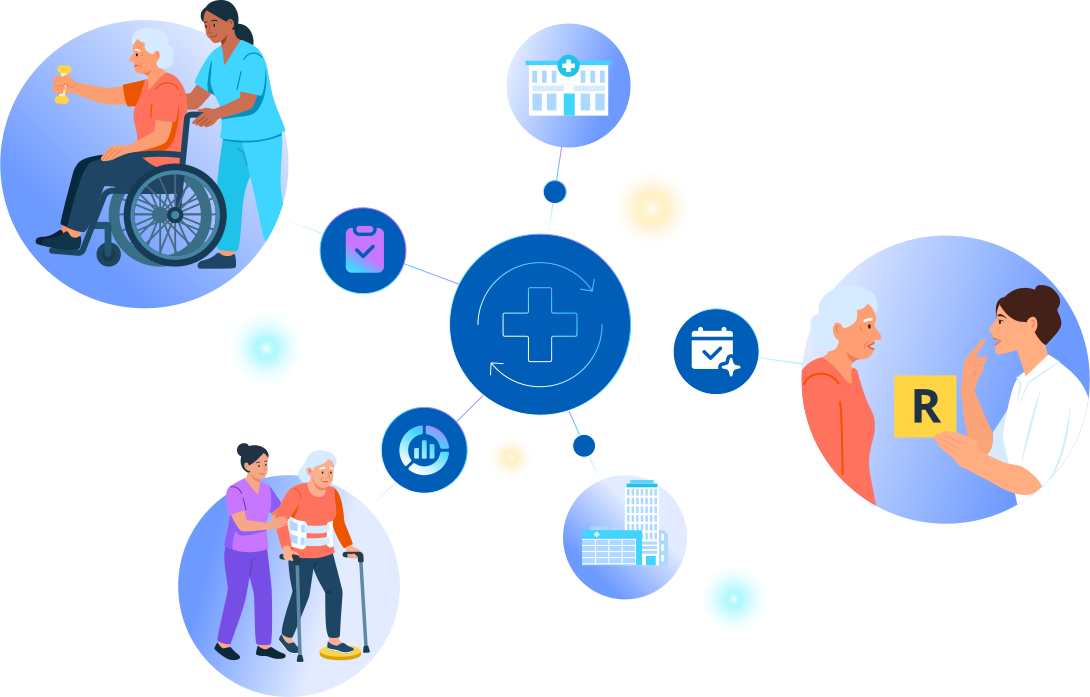
AI Transformation Opportunities for Rehabilitation and Therapy Networks

Reduce documentation burden
Challenge. Therapists spend substantial clinical and after-hours time documenting evaluations and treatment sessions. This reduces patient-facing capacity, increases overtime, and contributes to clinician burnout.
Change. AI documentation assistants (e.g., ambient scribes) can reduce the time therapists spend recording evaluations and treatment sessions. Physical Rehabilitation Network reported cutting evaluation documentation time from about 17 minutes to under 90 seconds after implementing an AI documentation solution. Similarly, Mountain Land PT reported 50–75% less documentation time for evaluations and 25–50% for daily notes.

Reduce prior authorization and payer administration effort
Challenge. Eligibility verification and prior authorization often involve repetitive manual work across payer portals, clinical documentation, and internal systems. Staff have to locate and re-enter information, check requirements and visit limits, follow authorization status, and resolve exceptions, which increases administrative effort and can delay treatment or contribute to authorization-related denials.
Change. AI-assisted prior authorization tools can check payer requirements, extract relevant clinical data from EHR and treatment documentation, prepare submission packages, track authorization status, and route exceptions for staff review. Blue Stone Therapy reported 2x faster prior authorization submission after digitizing its patient onboarding and financial clearance workflows. Meanwhile, in late 2025, SPRY introduced the first AI-powered prior authorization tool purpose-built for rehab therapy clinics. It’s promised to automate up to 80% of supported authorization workflows and reduce submission time from over 20 minutes to about 90 seconds.

Optimize scheduling and booking
Challenge. Multi-location therapy networks must balance therapist availability, patient needs, treatment plans, insurance limitations, and facility capacity. Manual scheduling often leaves unused capacity and requires significant administrative effort.
Change. AI-powered scheduling solutions can recommend schedules that better match therapist skills, patient needs, and available resources; they can also automate routine booking workflows. This helps networks improve utilization, reduce administrative workload, and increase access without adding more staff. A rehabilitation center using an AI scheduling optimization model reported approximately 29% higher provider utilization and around 10% more billable hours by optimizing therapist assignments, patient goals, room availability, and insurance constraints.

Expand therapist capacity
Challenge. Growing caseloads can stretch therapist capacity, especially when clinicians must review large amounts of patient progress and exercise data to decide who needs additional attention or treatment adjustments.
Change. AI-powered digital rehabilitation platforms can support therapists by analyzing patient progress and exercise data, highlighting cases that may need intervention, and assisting with care plan adjustments. In a peer-reviewed study of a digital MSK rehabilitation program, adding an AI decision support tool increased the PT-to-patient ratio from 1:57 to 1:129 while maintaining comparable pain outcomes (64% vs. 63%).

For rehabilitation networks, I see the strongest GenAI opportunities in workflows where clinicians or administrative teams repeatedly collect, review, or prioritize large amounts of information. Documentation and prior auth are good examples because AI can take over much of the repetitive work while leaving clinical judgment with the therapist. But before implementing AI, we should look at the baseline: how many staff hours the process consumes and where delays and rework happen. If the real problem is duplicate data entry, fragmented systems, or inefficient approvals, you may actually need system integration or traditional automation — they’ll deliver more value than AI. AI becomes valuable when a process requires interpretation (e.g., analyzing clinical notes and suggesting next steps based on internal protocols) that cannot be codified into strict rules.
IT Services We Offer
AI transformation
IT consulting
- Healthcare technology consulting
- Digital transformation and cloud consulting
- QA consulting for ongoing software initiatives
- Healthcare analytics consulting
Healthcare software engineering
- Custom software development (incl. web and mobile development)
- UX and UI design
- Healthcare software testing
- Team augmentation
Modernization and integration
- Application modernization
- Legacy system integration (e.g., connecting inherited therapy EHR, practice management, and billing systems across acquired clinics)
- Rehab ecosystem integration (e.g., connecting therapy systems with referring providers and payer services)
- Data consolidation across locations
- Cloud migration
Cybersecurity and compliance
- Cybersecurity consulting
- Compliance consulting (HIPAA and GDPR compliance, and more)
- Penetration testing
- IT security audits
- Security information and event management (SIEM)
- Managed security services
Healthcare IT support
- L1, L2, L3 employee help desk for healthcare
- Maintenance and troubleshooting of healthcare applications
- IT infrastructure management and evolution
- Digital workplace management
Software Solutions for Rehabilitation & Therapy Networks
ScienceSoft can extend and connect the systems already used across your network, add custom functionality for therapy-specific workflows, and modernize legacy applications. When existing products cannot support the required care model, scale, or integrations, we can design and build a custom solution.
Clinical therapy and rehabilitation workflows


Home exercise program (HEP) software


Telehealth software for speech and occupational therapy
Remote therapeutic monitoring (RTM) software


Practice management and revenue cycle

Referral management and physician relationship platforms

Multi-site rehab operations management platforms

Therapist workforce management software


Eligibility verification and patient cost estimation tools

Prior authorization tools

Medical billing and coding software

Claims and denial management tools


Patient access and communication



Digital intake, consent, and patient education tools


AI for scheduling
Quality, compliance, and accreditation software



Quality and value-based reporting software
Interoperability and data management



Our Clients Say


Patrick Pakan
Founder and CEO

Thanks to ScienceSoft’s practical healthcare IT expertise, we created a musculoskeletal therapy platform that can be fully customized and reflect the needs of each program member.



They bring top-quality talents and deep knowledge of IT technologies and approaches in accordance with ISO 13485 and IEC62304 standards. I would also like to point out that ScienceSoft's team demonstrated a great engineering culture, a proactive approach to work, and the communication was easy and clear.

I am particularly impressed by the cooperative nature of ScienceSoft's team. They are reliable, thorough, smart, available, extremely good communicators and very friendly. We would recommend hiring ScienceSoft to anyone looking for a highly productive and solution-driven team.