ScienceSoft Global



- AI consulting (AI readiness assessment, strategy, and adoption planning)
- AI solution selection, integration, and development
- AI governance, security, and performance management
AI Transformation and IT services for Urgent Care and Emergency Medicine
In healthcare IT since 2005, ScienceSoft engineers and modernizes software supporting urgent and emergency care. We help streamline intake and triage, speed up clinical documentation and diagnostics, and improve discharge, admission, and transfer workflows.
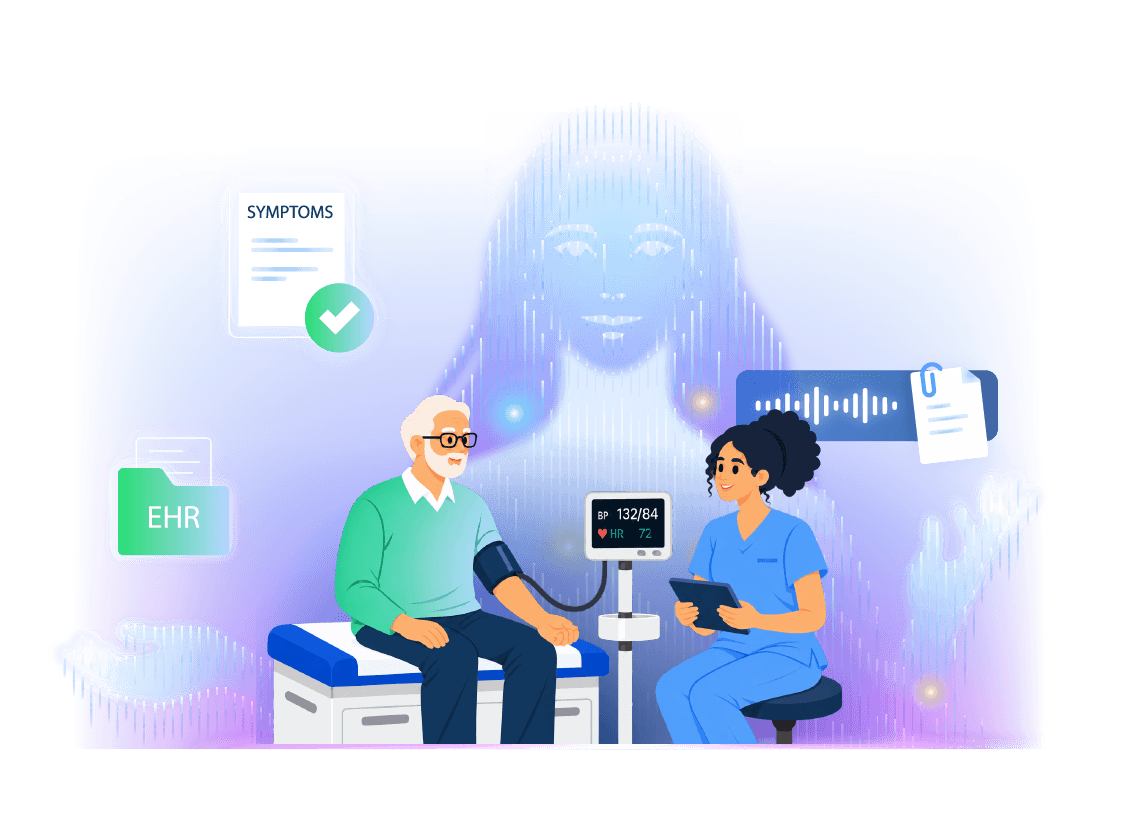
AI Transformation Opportunities for Urgent Care and Emergency Medicine

Faster intake for triage teams
Challenge: intake staff often have to collect symptoms, history, medications, allergies, consent, and other details while patients are waiting to be assessed. Missing information and repeated questions can slow triage and add work for nurses.
Change: AI can collect symptoms, history, medications, allergies, consent, and available vital signs before or during check-in, then structure the information for triage staff. Organization-approved rules can flag missing information and trigger immediate staff attention when specified responses or vital-sign thresholds are present. Licensed clinicians assign acuity and decide the next steps. This reduces duplicate questioning and gives triage staff a more complete starting point.

Less documentation work
Challenge: clinicians in urgent and emergency care have little time for lengthy charting between high-volume encounters. Repetitive documentation can extend time spent per patient and add after-hours work.
Change: AI documentation assistants can transcribe encounters, draft clinical notes, populate structured EHR fields, and flag incomplete information. Clinicians review, correct, and sign every draft before it becomes part of the patient record. This can reduce repetitive charting without allowing the documentation tool to make clinical or billing decisions.

Better care demand and patient flow visibility
Challenge: patient volumes, bed availability, diagnostic delays, and staffing constraints can change quickly, making it difficult to see where bottlenecks are forming and which actions would have the greatest effect.
Change: AI can forecast patient volume and capacity pressure, identify the constraints most likely to delay care, and rank operational responses by expected impact. For example, it can recommend which eligible bed or unit can accommodate a patient sooner, which delayed task to escalate, or how to balance demand across urgent care sites. The result can be faster patient placement and bed assignment, shorter waits, higher use of available capacity, and less staff time spent on manual flow coordination.

More reliable discharge and follow-up
Challenge: discharge instructions, referrals, and follow-up actions can be difficult to coordinate in fast-moving urgent and emergency care settings. Missing or inconsistent information may lead to additional calls, incomplete follow-up, or avoidable returns.
Change: AI can draft discharge instructions from approved clinical data and identify missing or conflicting information before release. Once the clinician approves the discharge plan, agentic AI can turn it into actions across connected systems: for example, initiate appointment scheduling workflows and create follow-up action lists. This can reduce time spent preparing and coordinating discharge and help more patients complete the next steps in their care.

Fewer preventable denials
Challenge: high-volume walk-in care leaves little time to resolve coverage and coding issues before claims are created. Small data gaps can lead to delayed payment, downcoding, or preventable denials.
Change: AI and rules-based automation can reconcile registration and coverage data, flag documentation or coding gaps, classify payer responses, and prepare appeal drafts. Revenue cycle staff validate codes, claims, and appeals. Where non-emergency services require prior authorization, an AI workflow can check payer requirements, assemble supporting evidence, and track status. This can reduce preventable denials and rework, shorten claim resolution time, and speed up reimbursement.

In triage, AI should support intake, not make clinical decisions. It can collect and structure patient information and alert clinicians to reported high-risk symptoms, while acuity assessment and next-step decisions stay with qualified clinical staff. This way, providers can speed up intake and increase staff capacity without delegating medical judgment to AI.
IT Services for Urgent Care and Emergency Medicine
AI transformation
IT consulting
- Healthcare software and IT infrastructure consulting
- Digital transformation consulting
- Cloud consulting (including HIPAA-compliant cloud selection)
- UX and UI design services
- QA and DevOps consulting for ongoing software initiatives
Software engineering
- Custom urgent and emergency care software development
- Web and mobile application development
- Software testing and quality assurance
Modernization and integration
- Urgent care and ED software modernization.
- Application integration, including legacy software integration.
- Healthcare interoperability and interface development.
- Clinical and operational data migration.
- Cloud migration.
Data management and analytics
Cybersecurity and compliance
- Healthcare cybersecurity consulting
- Security assessment and penetration testing
- Security monitoring and managed security services
- Compliance support (e.g., for HIPAA)
IT support services
- L1–L3 support
- Software performance and availability monitoring
- Healthcare IT infrastructure management
Software Solutions for Urgent Care and Emergency Medicine
ScienceSoft can extend and integrate the systems already used by urgent care or emergency care teams, modernize legacy applications, or develop custom software when existing products don’t support the required workflows.

Core clinical systems
- EHR solutions for urgent care
- Emergency department workflow software
- Care coordination tools
- Referral and transfer management software
- Clinical decision support systems
- Secure messaging software

Diagnostics and medication
- RIS add-ons and connectivity
- PACS add-ons and connectivity
- LIS add-ons and connectivity
- Medication management and e-prescribing software

Patient access and virtual care
- Digital check-in and queue management software
- Patient scheduling software
- Patient portals
- Telemedicine for acute care

Revenue cycle and administrative workflows
- Medical practice management software
- Revenue cycle management software
- Charge capture, medical billing, and coding tools
- Claims and denial management tools
- Analytics solutions for urgent care and ED

Workforce and resource operations
- Healthcare workforce management software
- Provider credentialing and privileging software
- Medical inventory and supply management software
- Medical equipment and asset tracking software

Quality and compliance
- Quality management software
- Compliance management software
- Clinical quality and outcome reporting software
- Accreditation management software
- Incident and patient safety management software
Streamline Urgent and Emergency Care With Better Software
Talk to our healthcare solution architects and consultants to co-shape a pragmatic plan for your urgent or emergency care IT initiative.
Our Clients Say



We have been very pleased with ScienceSoft. Its developers demonstrated a profound understanding of laboratory software specifics and integrations. I am particularly impressed by the cooperative nature of ScienceSoft's team. Our project required coordination with multiple companies and individuals. ScienceSoft worked well with everyone.



Working with ScienceSoft was a pleasure from A to Z. We are grateful for their can-do attitude, responsiveness, and straightforward communication. RIVANNA already witnessed tangible benefits of our cooperation. We have more projects to come and are looking forward to working with ScienceSoft again.

After we shared our interest from the medical perspective, ScienceSoft suggested we explore it through a Proof of Concept – and took full ownership of its development. They collaborated with our medical professionals with great professionalism and care, respecting the research environment and its unique challenges.