 ScienceSoft Global
 Healthcare
 Insurance
 Investment



Is Java Still Used in 2026?


Related topics:
3 min read
Last updated:
Editor's note: In this article, Artem addresses a question many teams ask when planning new software projects: Is Java still the right choice? He explores where Java stands today and how it compares to alternative technologies. To see where ScienceSoft applies Java in real-world projects, explore our Java development services.
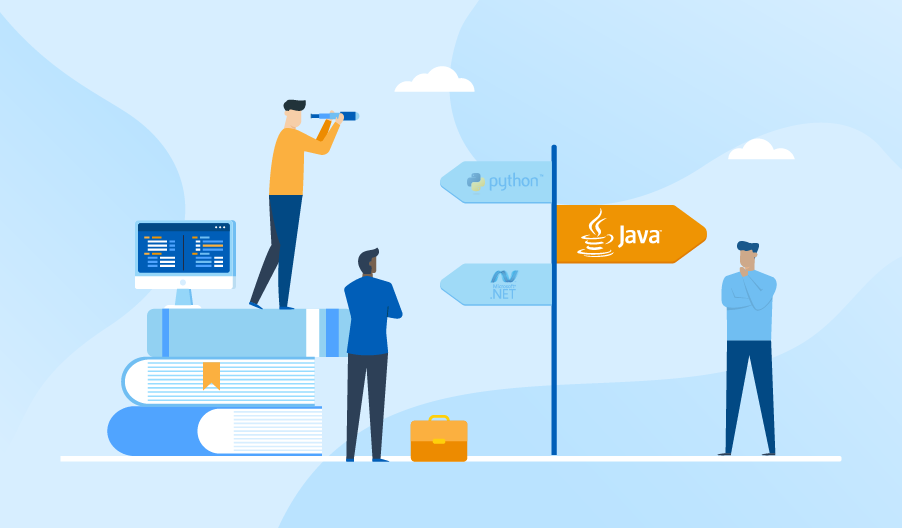
Turning 30 in 2025, Java has outlasted countless technology fads and shifts. Few programming languages can claim such staying power. But longevity alone doesn’t guarantee relevance. Is Java still widely adopted, and will it keep powering competitive applications in the future? Let’s explore.
Java Keeps Up With the Times
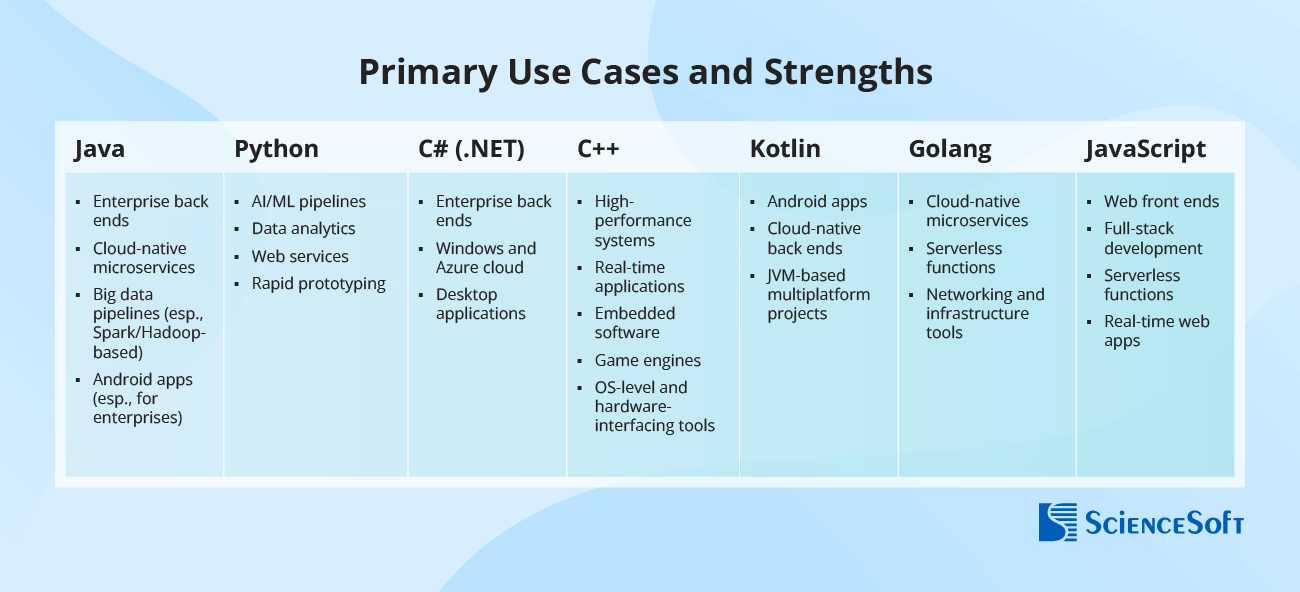
Since its debut in the mid-1990s, Java has been one of the most influential programming languages in the world. Over the decades, it has consistently ranked at the top of global language popularity indexes — reaching #1 as recently as April 2020 and never falling below #4, even in September 2025. Twice, in 2005 and 2015, Java earned the title of “Language of the Year” for its impact and adoption across industries. However, its recent shift in rankings doesn’t seem to reflect a decline in importance. Instead, it highlights the rise of alternatives aligned with emerging trends (e.g., Python that dominates AI, data science, and rapid prototyping) and the immovable role of C and C++ in operating systems, embedded platforms, databases, foundational computing areas, and computer science education.
Fresh data underscores this staying power. Azul’s 2025 State of Java Survey & Report reveals that 99% of surveyed organizations actively use Java, with nearly 70% relying on it for more than half of their applications. Also, over half of the surveyed companies’ public cloud workloads run on Java, and 50% of them leverage Java for coding AI functionality, with JavaML emerging as a go-to library. Stack Overflow’s 2024 survey adds that roughly 30% of developers actively use Java, reinforcing its broad community footprint and employer demand.
What keeps Java relevant is not just its legacy but continuous innovation. Since 2018, the language has followed a six-month release cadence, ensuring developers can tap into new features quickly. For enterprises, Java offers long-term support (LTS) releases, delivered every two years, which provide a tested foundation and multi-year vendor support.
In September 2025, we welcomed a new LTS release of Java. This version brings a suite of impactful enhancements that make the platform more productive, secure, and future-ready. It simplifies coding with compact source files, instance main methods, and streamlined module imports. For concurrency and scalability, it includes preview support for structured concurrency and brings in scoped values. Security also got strengthened with PEM encoding for cryptographic objects and a standard key derivation API, while performance now benefits Vector API incubator, compact object headers, and ahead-of-time method profiling.
Java Community and Job Market in 2026
Far from fading, Java remains one of the strongest programming communities worldwide. SlashData Developer Nation Survey Q1 2025 reports that out of 47.2 million active developers globally, 23.2 million belong to the Java community, making it the second-largest developer ecosystem. This scale translates directly into demand: in the US alone, Glassdoor lists over 5,000 open Java roles spanning industries from finance and healthcare to tech startups.
Compensation remains competitive. The average US Java developer salary is around $90,000 (PayScale, Indeed, Glassdoor), with senior specialists and architects regularly earning well above $115,000. Career growth follows both the classic ladder (junior -> middle -> senior -> lead -> architect/engineering manager) and high-value specialization tracks — such as SRE, big data engineering, streaming systems, distributed back-end architectures, and ML model serving — all of which heavily rely on Java.
Java vs. Major Alternatives
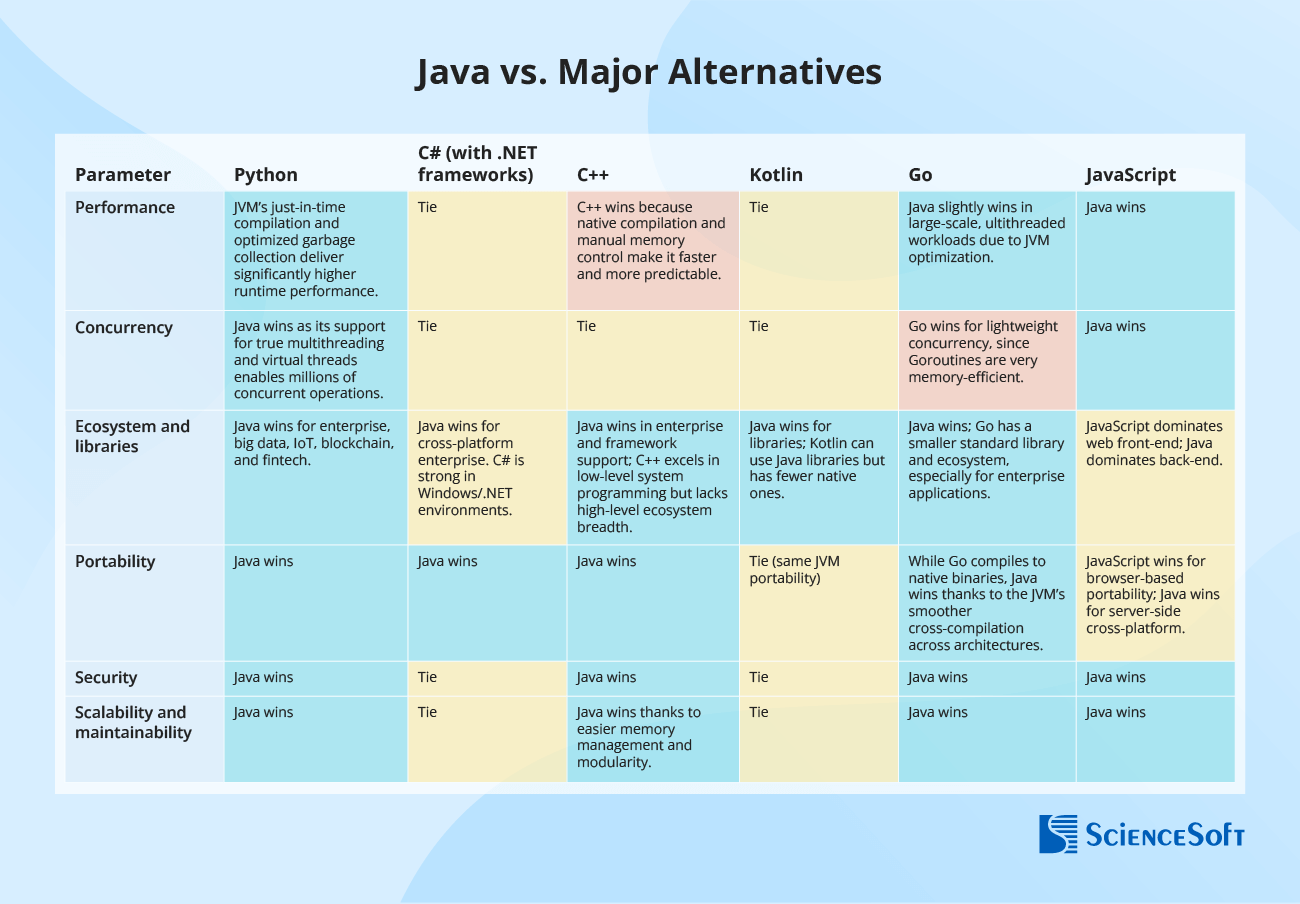
Java consistently excels in performance, concurrency, security, and maintainability.
- Compared to Python, Java offers higher runtime speed, true multithreading, and stronger type safety.
- Against C++, Java sacrifices some low-level speed but gains portability, memory safety, and maintainability.
- Kotlin inherits Java’s strengths, but it is chosen for modern Android development due to concise syntax, null safety, and productivity improvements, while Java is preferred for legacy projects or cross-platform enterprise codebases.
- Go is highly efficient for lightweight, microservice-oriented workloads, but Java scales better for data-intensive and high-concurrency systems.
- C# is strong in Windows/.NET environments, yet Java maintains the edge in heterogeneous enterprise deployments and cross-platform reliability.
- Node.js allows JavaScript to thrive on the back-end for I/O-bound, event-driven workloads, but Java dominates CPU-intensive, high-throughput, or enterprise-scale back-ends, where mature frameworks, type safety, and multithreading are critical.
Java in Big Data, IoT, AI/ML, and Blockchain
Java and big data
Java is one of the safest, most pragmatic choices for big data back ends. Many of the foundational big data technologies are JVM-centric: Apache Hadoop, Apache Kafka, Elasticsearch, Apache Flink, etc. That means less integration friction, native connectors, stable cluster management, and years of real-world testing. Also, modern JVM features, such as virtual threads and low-latency garbage collectors (ZGC, Shenandoah), provide high throughput, predictable performance, and scalable concurrency. For highly concurrent back-end architectures in big data, reactive programming frameworks like Akka Actors enable event-driven, reactive designs that handle millions of messages efficiently, complementing Java’s built-in concurrency features. And Java’s extensive libraries for data formats such as Parquet, Avro, and ORC further enable efficient I/O and storage for large datasets.
Java and AI/ML
Java shines in production-grade AI and machine learning (ML) pipelines, particularly where integration with enterprise systems is required. Frameworks like Deeplearning4j, Weka, and MOA allow Java to handle real-time ML, predictive analytics, and streaming AI workloads efficiently.
Java and IoT
With cross-device compatibility, strong concurrency, reliable data handling, and robust security, Java is well-suited for IoT systems. According to the 2023 IoT & Edge Developer Survey by the Eclipse Foundation, Java is the preferred language for IoT gateways and edge nodes, while C and C++ dominate on highly constrained devices. Java is particularly common in:
- Industrial IoT, controlling machines, robotics, and automation processes in factories or plants.
- Consumer and enterprise IoT gateways, connecting edge devices to cloud services.
- Data-intensive IoT analytics platforms, aggregating and processing large volumes of sensor and telemetry data.
JVM-based frameworks like Apache IoTDB and Java clients for Kafka or MQTT provide seamless integration and efficient processing across these scenarios. Limitations occur mainly on highly resource-constrained devices, where languages like C/C++ offer faster startup, smaller memory footprints, and lower-level hardware control.
Java and blockchain
Java has become a cornerstone for enterprise-grade blockchain platforms such as Hyperledger Fabric and Corda, powering secure, scalable, and maintainable distributed ledger systems. Its low-latency execution, strong typing, static analysis, and memory safety help ensure reliability and consistency, making it a trusted choice for blockchain solutions in finance, supply chain, and other sectors.
Experts About the State and Future of Java
Industry experts confirm that Java continues to evolve and remain highly relevant for developers and enterprises in 2026. In Oracle’s tribute to the release of Java 25, several leading voices reflected on what keeps the language modern and vital today:
“My favorite parts of Java 25 are compact source files, instance main methods, and module import declarations, as these features create a low-ceremony on-ramp to Java for beginning programmers,” said Cay Horstmann, Professor Emeritus, San José State University. “They also benefit experienced programmers, expanding the reach of Java to small, everyday tasks. I find it very satisfying to rewrite brittle shell or Python scripts in Java — an industrial-strength, strongly-typed language with great tool support.”
Highlighting the strength of the Java ecosystem and community, Richard Fichtner, CEO of XDEV Software GmbH, adds, “Java’s greatest strength is its community. At JUG Oberpfalz, we’re restarting our ‘(Re)Start with Java’ talks in 2025, and developers are always impressed by how much the language has evolved. Modern Java is more productive, safe, and innovative than ever — proof of what community and collaboration can achieve.”
Ulad Sinkevich, Principal Architect at ScienceSoft, also believes in Java’s enduring relevance and enterprise impact:
“Having led Java development for over 15 years, I’ve seen how Java continues to evolve to meet modern enterprise needs while remaining a stable and reliable platform. Our recent large-scale, from-scratch Java projects include banking and investment systems, telehealth platforms, procurement software, and ride-hailing apps. Its combination of maturity, continuous innovation, and strong ecosystem makes Java a trusted foundation for mission-critical systems — today and well into the future.”
Should You Choose Java for Your Next Development Project?
Java remains robust, versatile, and highly relevant. Its strong ecosystem, evolving modern features, and wide adoption across IoT, AI, big data, blockchain, and cloud-native applications make it a reliable choice for both enterprise-scale systems and innovative projects.
If you are planning a new project and need expert guidance or hands-on support, our team of experienced Java architects and developers can provide the strategic insight and technical expertise to ensure your project succeeds — from design and architecture to implementation and optimization.
