 ScienceSoft Global



ScienceSoft Expects One in Ten US Medical Visits to Be Virtual by 2030


Related topics:
Last updated:
ScienceSoft is a US-based AI transformation and software engineering company with 21 years of experience in the healthcare domain. We deliver compliant patient-centric solutions tailored to different medical specialties such as neurology, pediatrics, primary care, and more.
By 2030, one in ten of all medical visits in the United States could take place virtually. Although telehealth adoption has stabilized at a relatively low level since 2022, gradual growth is expected across specialties such as mental health, endocrinology, obstetrics, and primary care. The pace of adoption will likely depend on whether temporary Medicare telehealth flexibilities, currently extended through December 31, 2027, are made permanent.
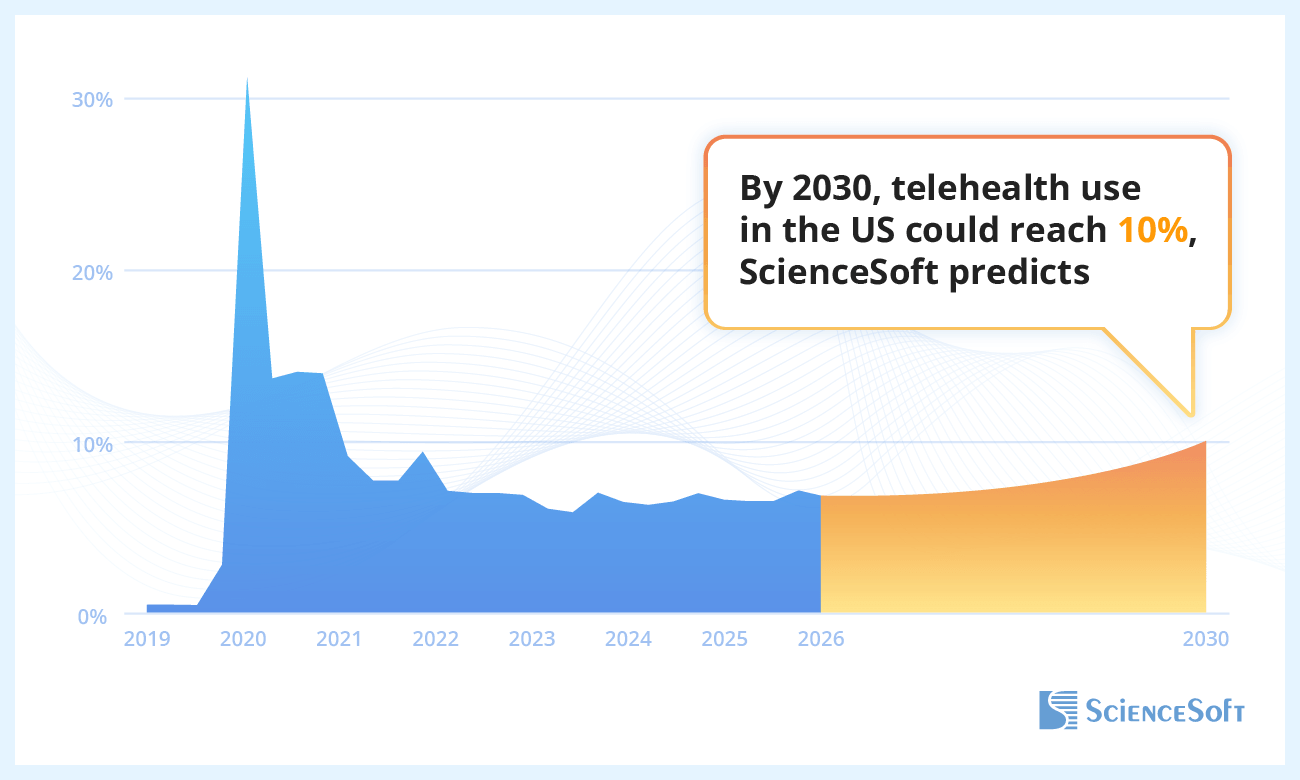
ScienceSoft’s research team analyzed industry statistics, current developments and limitations in telehealth regulations, and opinions of healthcare community leaders to present a fresh perspective on the future of telehealth in the US.
Why You Shouldn’t Give Up on Telemedicine
Due to lockdowns enforced during the COVID-19 pandemic, the US health systems quickly adapted to remote health services, which allowed patients to receive care while minimizing infection risk. Federal regulations were relaxed, and telehealth reimbursement policies were expanded, encouraging providers to incorporate telemedicine services broadly.
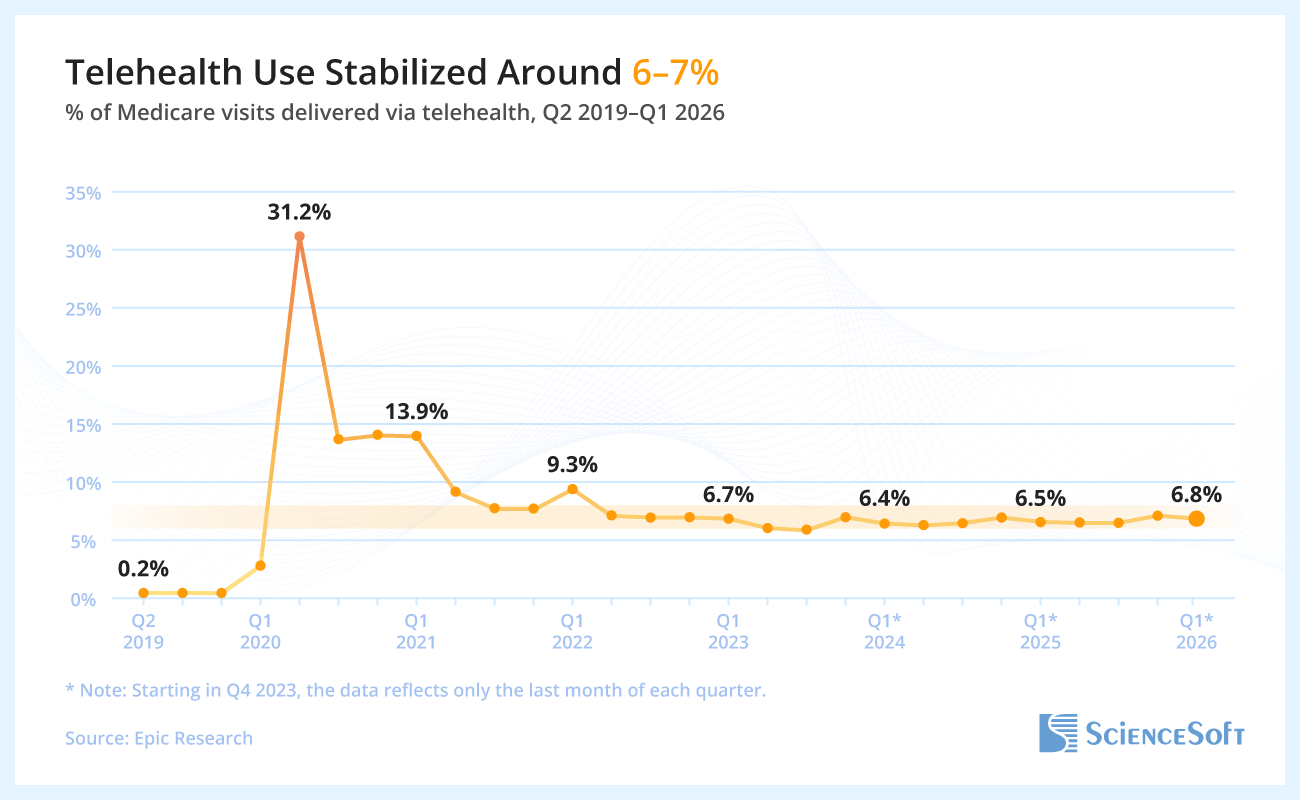
Fast-forward a couple of years, and the adoption of telehealth dropped significantly. Still, its usage in the US remained at a higher level than before the pandemic: now, telehealth represents a small but stable share of overall healthcare utilization. According to Epic, the share of medical visits conducted via telehealth has remained at approximately 6–7% since 2022.
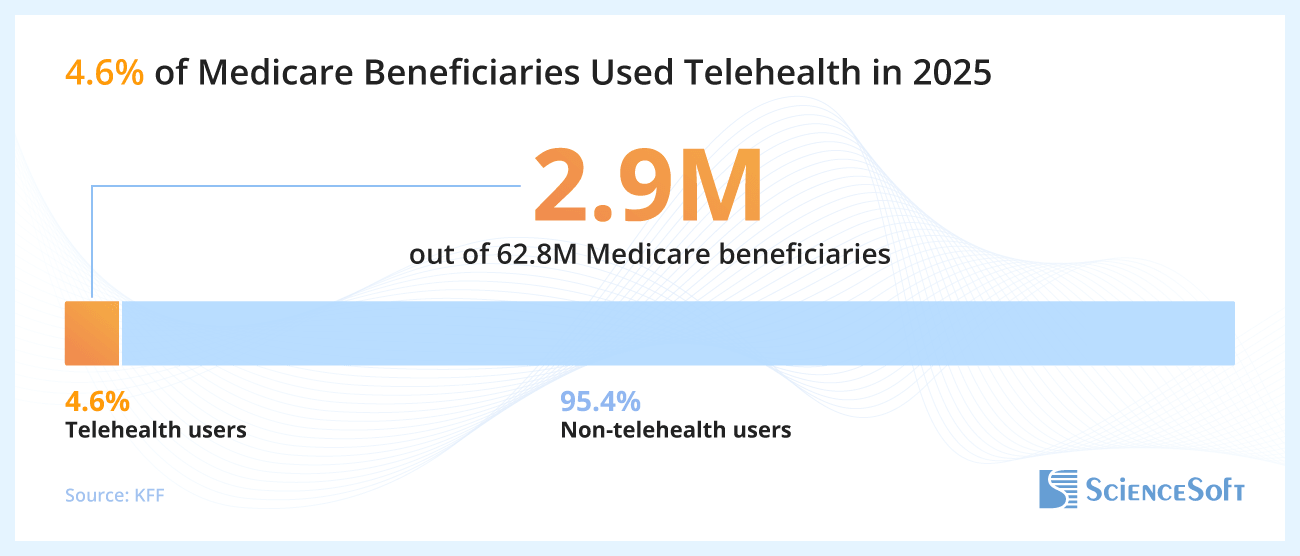
In 2025, 4.6% of Medicare beneficiaries — 2.9 million out of 62.8 million — used telehealth services, up slightly from 4.2% in Q1 2024.
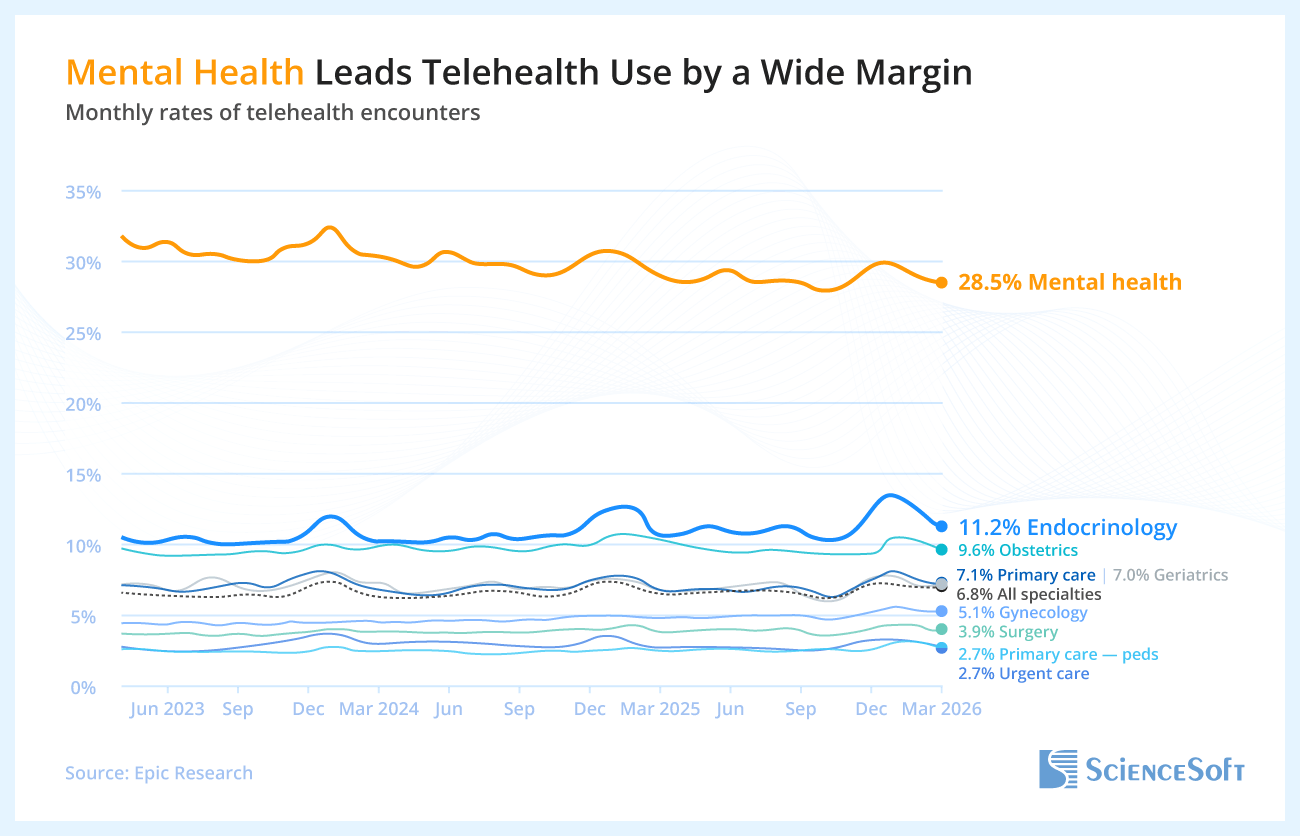
The mental health sector remains the leader in telemedicine adoption
Mental health continues to lead telemedicine adoption in the US. In March 2026, the highest share of encounters conducted via telemedicine was in mental health — 28.5%, which is 17.3 percentage points higher than endocrinology, the second-highest specialty by telehealth use.
At the same time, telemedicine use in mental health has been gradually declining: from 31.8% in April 2023 to 27.9% in October 2025, the lowest level in the analyzed period, and 28.5% in March 2026. Meanwhile, other specialties, including endocrinology, obstetrics, and primary care, have shown modest growth in telemedicine adoption in late 2025 and early 2026.
The persistent demand for online mental health services has fueled the attention of investors. According to the KPMG report on M&A activities in mental health services, private equity firms show interest in investing in telehealth platforms that offer mental health services.
The growth in telemedicine usage during the pandemic stimulated the adoption of e-prescribing in mental health. According to Trilliant Health, in the third quarter of 2023, e-prescribing accounted for roughly one-third of antidepressant prescriptions. This option can help patients avoid unnecessary in-person visits that may cause additional anxiety or be difficult due to distance, cost, childcare, or work obligations.
However, the future of telehealth-based prescribing remains partly dependent on regulation. As of 2026, the DEA and HHS have temporarily extended COVID-era telemedicine flexibilities for prescribing controlled substances through December 31, 2026, but no permanent framework has been finalized yet. If these flexibilities expire without a permanent rule or another extension, providers may again need to conduct in-person medical evaluations before prescribing or renewing certain controlled medications via telehealth.
We believe that the resilient utilization of telemedicine in mental health shows that the necessary technology and demand are already in place. Key obstacles to broader telemedicine adoption are related to regulations, reimbursement, broadband access, and care model design rather than technology alone. With continued support from the healthcare community, US policymakers have an opportunity to turn temporary telehealth rules into permanent policies that support gradual, sustainable growth of virtual care.
The main hurdle to telehealth growth in the US is lack of permanent government support
After analyzing the regulatory landscape surrounding telemedicine, we came to the conclusion that the future of its adoption — whether it continues to grow gradually or stagnates — largely depends on government decision-makers.
In February 2026, the US government passed and the president signed a funding law extending temporary telehealth rules introduced during COVID-19. The law includes a two-year extension of Medicare telehealth flexibilities through December 31, 2027, and a five-year extension of the Medicare Acute Hospital Care at Home waiver program.
According to Alexis Apple, Deputy Executive Director of ATA Action and Vice President of Public Affairs at the American Telemedicine Association, the next two years will be used to develop permanent telehealth policies.
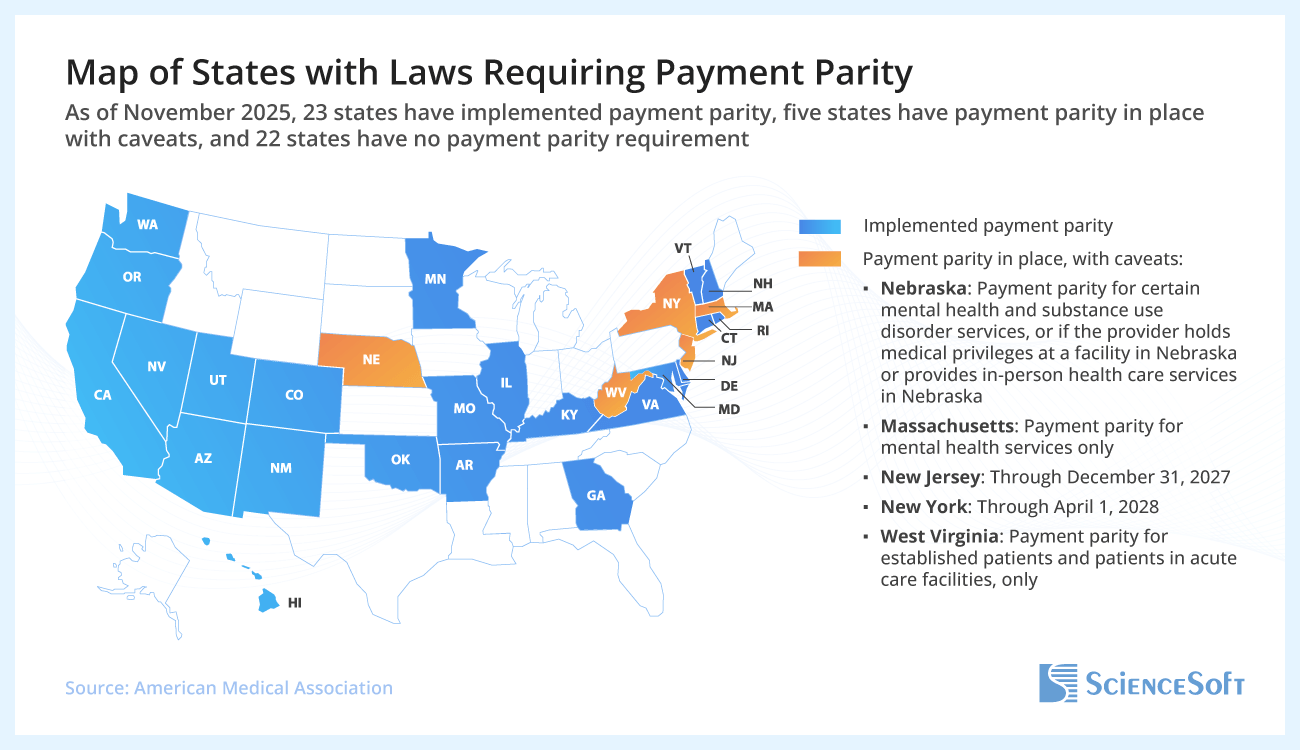
According to the AMA’s guide to the appropriate use of telemedicine, telehealth adoption is slowed by a lack of financial viability. In this regard, state regulations are halfway to meeting the needs of the healthcare community. As of November 2025, 23 US states had implemented payment parity policies, ensuring that telehealth services are reimbursed at the same rate as in-person visits. If the other states follow the general trend, that may become a push towards telemedicine adoption.
However, cross-state regulations remain a challenge for both patients and providers. According to the Cicero Institute and Pioneer Institute’s 2026 State Policy Agenda for Telehealth Innovation, only four states — Arizona, Colorado, Delaware, and Utah — earned the highest rating for allowing patients to access providers across state lines without unnecessary barriers. Most other states still rely on limited interstate compacts or state-specific licensing requirements, which can restrict patient access to out-of-state virtual care.
The story of Maki Inada, a biology professor from New York, illustrates the impracticality of the situation: her Boston-based cancer specialists required her to be in Massachusetts for a telemedicine visit. The hospital suggested she could “just” drive five and a half hours to the state border and conduct the session from her car.
This problem is especially relevant for mental health, the leading telehealth domain in the US. A 2025 Cicero Institute report on mental health telehealth notes that state-specific licensing restrictions can create confusion for behavioral healthcare providers about whether they are allowed to deliver care across state lines. This can disrupt continuity of care and may be particularly problematic when providers work with patients in crisis or those struggling with substance use disorder.
Key Setbacks and Drivers of Telehealth in 2026: Facts and Insider Opinions
Healthcare organizations are operationally prepared, but access gaps remain — especially in rural areas
The slow adoption of telemedicine is not purely a matter of telehealth availability. According to hospital technology implementation data from Definitive Healthcare, as of April 2026, about 60% of hospitals in the United States had installed a telemedicine solution.
Community health centers also show strong operational readiness. According to the Commonwealth Fund, 96% of Community Health Centers in the US offered telehealth services in 2024, compared with 24% in 2018.
However, access to broadband and technology remains a barrier for patients in rural and underserved areas. According to the Commonwealth Fund’s 2024 survey of federally qualified health centers, 94% of CHC leaders said lack of patient access to broadband or technology was a major challenge when using telehealth. Rural CHCs were also significantly more likely than urban ones to report that financial considerations were a challenge.
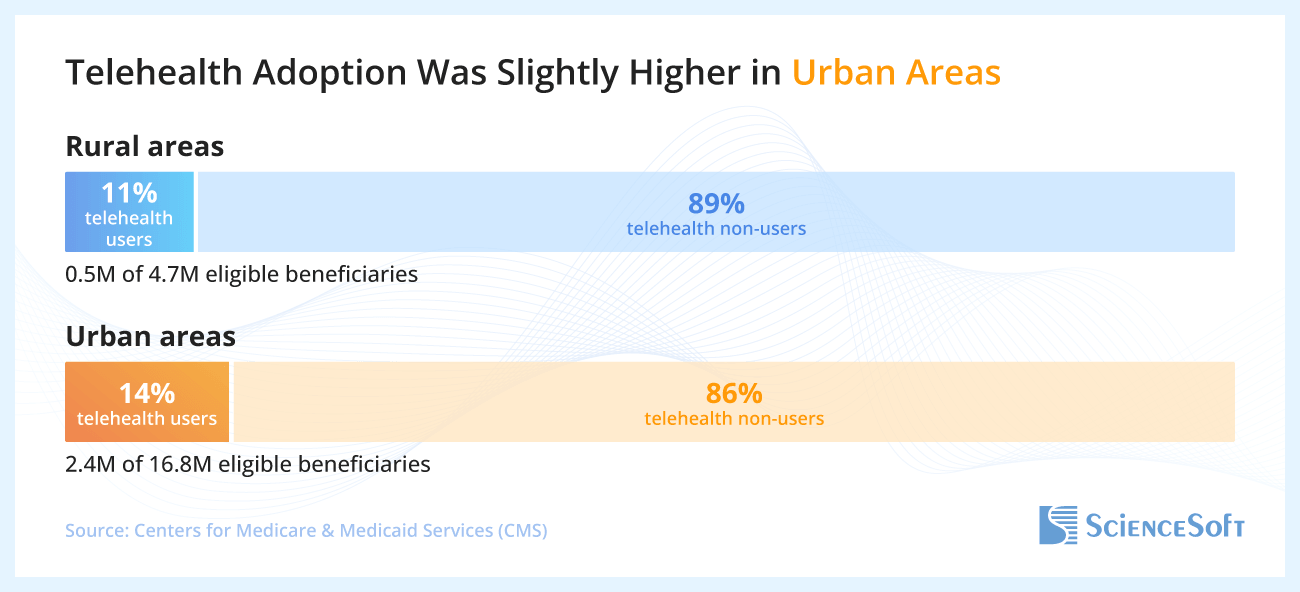
CMS data also shows that telehealth adoption among Medicare beneficiaries remains slightly higher in urban areas than in rural areas. In 2025, 14% of telehealth-eligible Medicare beneficiaries in urban areas used telehealth services, compared with 11% in rural areas.
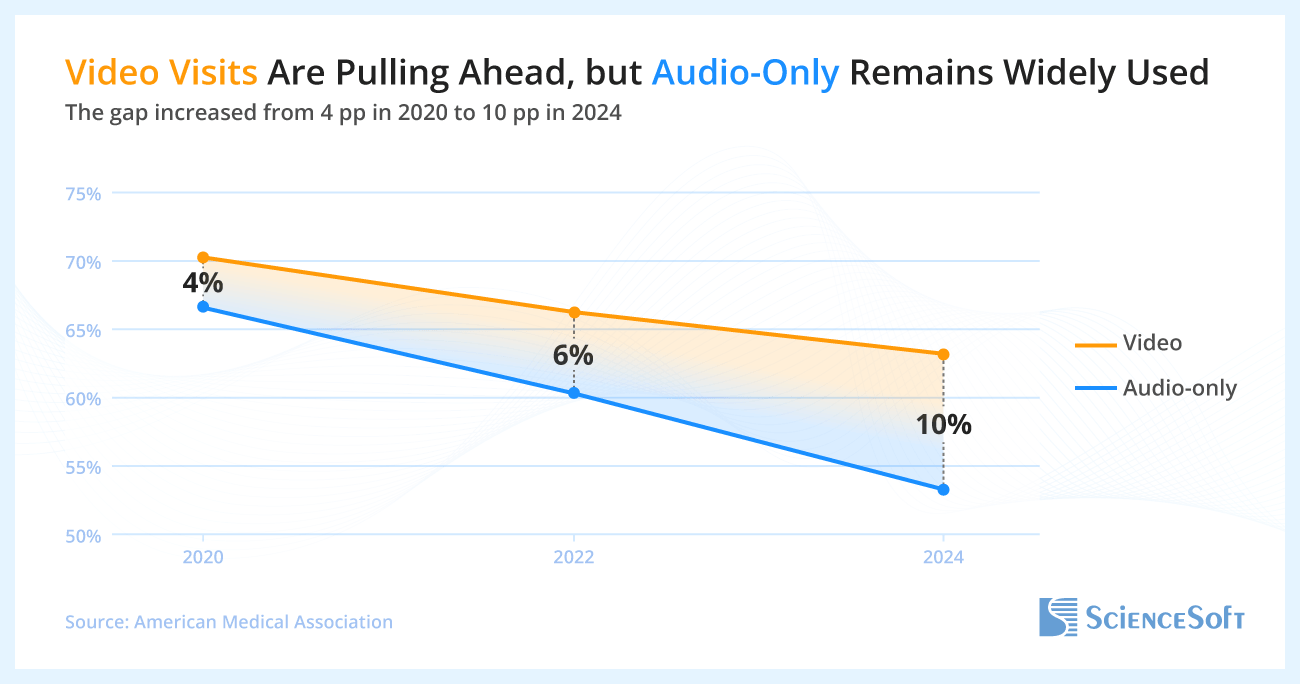
For these patients, audio-only visits remain important. According to the American Medical Association, physicians used audio-only and video telehealth at nearly equal rates in 2024. However, the gap in usage between video and audio-only telehealth widened to 10 percentage points in 2024, compared to 6 percentage points in 2022 and 4 percentage points in 2020, all in favor of video visits.
Preferences also vary depending on the type of clinical interaction. According to a 2025 survey of US clinicians and adults, video telehealth is preferred for new clinical interactions, while audio-only visits are often considered sufficient, and sometimes preferable, for routine follow-ups.
Industry representatives expect gradual growth and hybrid care models
Many experts in the industry believe that telemedicine adoption during the pandemic was unnatural, and in the future, it will be more gradual as society needs time to adapt to these changes. Rather than replacing in-person care, telemedicine is expected to become part of hybrid care delivery models.
Robin Glass, president of virtual care and health navigation company Included Health, said: “I think the simplest way to say what we're seeing right now is we're observing the shriveling of telehealth 1.0. This original model was really premised on this highly transactional interaction between a patient and the clinician that didn't have any elements of longitudinal care or treating that individual as a holistic person.”
Internist Eyal Zimlichman, MD, also expects gradual transformation: “The nation’s healthcare system will experience an evolution — not a revolution — of telehealth.”
At the same time, there’s a growing interest in new ways of delivering care through telehealth innovations. Ateev Mehrotra, professor of health care policy at the Blavatnik Institute at HMS, believes that technological advances are slowly changing how we define the practice of medicine. A striking example of this transformation comes from Dubai, where healthcare provider Medcare launched its first hospital in the metaverse. As a digital twin of the physical hospital, it allows patients to experience its services before traveling to the physical space, including consulting with their doctors in VR.
How Telemedicine Transforms Healthcare in the Post-COVID Era: A Realistic Look
Providers see higher patient capacity and lower costs per visit
Telemedicine can help healthcare facilities optimize resource use, especially when combined with hospital-at-home and remote patient monitoring models. These programs create an equivalent of at-home “virtual beds,” allowing selected patients to receive hospital-level care without occupying inpatient capacity. For example, in 2025, the American Hospital Association reported that Advocate Health’s Hospital at Home program had served more than 16,500 patients across 12 facilities and avoided more than 60,000 inpatient bed days.
At the same time, telemedicine can increase the administrative and cognitive burden on clinicians. Virtual care is associated with more time spent in EHR systems, as well as more messages sent and received, which can impose higher stress and cognitive load.
Senior healthcare professionals who have practiced for decades in a traditional, face-to-face model of care may also face the challenge of adapting to new technologies. To support this transition, healthcare organizations will need to implement efficient, accessible training programs that help these practitioners build confidence in using telehealth tools. Ensuring that telemedicine platforms have user-friendly and intuitive design is another way to minimize technological barriers and cognitive load for clinicians.
I see that many physicians whom I interview as part of my work remain cautious about fully embracing telemedicine. All regulatory hurdles aside, they are sometimes unwilling to recommend remote consultations to their patients due to the risk of missing critical symptoms that might be more apparent in an in-person exam. From my perspective, it’s important to strike a balance here. For routine follow-ups, medication refills, mental health consultations, or minor ailments like colds and flu, virtual visits can be an excellent way to save time and reduce strain on the healthcare system. However, for more complex or urgent issues, such as acute pain, an in-person visit is crucial for an accurate diagnosis and immediate intervention.

Healthcare IT & AI Consultant, ScienceSoft
Patients enjoy higher care accessibility but face the risk of alienation without in-person visits
Telemedicine makes care more accessible for rural and underserved areas where physical facilities are scarce. If cross-state regulations become more flexible, patients’ choices will expand with specialty care and providers outside their geographic location.
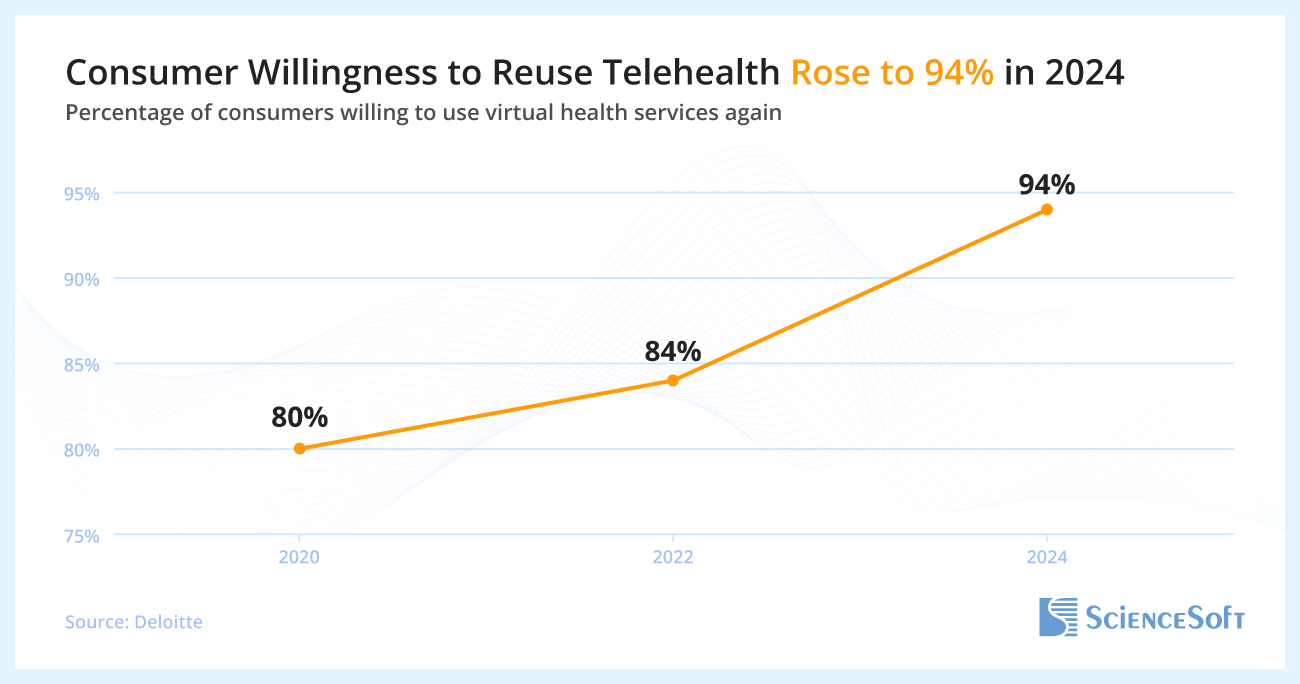
Consumer acceptance of telehealth also continues to grow. Deloitte’s 2024 survey of over 2,000 US healthcare consumers found that 94% of respondents who had a virtual visit were willing to have another one, up from 84% in 2022 and 80% in 2020. Convenience remains one of the main reasons patients choose virtual care.
Reduced travel to healthcare facilities means less exposure to potential health risks for patients and those they might encounter during their journeys. Patients with chronic conditions can benefit from continuous monitoring and regular check-ins, helping them manage their health proactively. Additionally, online consultations can provide a degree of anonymity not available during in-person visits, a key advantage for patients seeking help in socially stigmatized areas such as mental health.
However, telemedicine does come with challenges. The biggest one is the potential reduction in the overall quality of care. Overreliance on technology may lead to patient reluctance to visit the hospital in person, which could prevent caregivers from noticing critical signs of disease that are best detected through physical examinations. This lack of face-to-face interaction may also lead to patients not feeling as accountable for following the prescribed treatment plans as they might with traditional family medicine.
Limited access to broadband technology also slows down telemedicine adoption, especially in rural areas. This means that telehealth can improve access to care only when patients have the devices, connectivity, and digital literacy needed to use it effectively.
Payers reduce claim severity at the cost of lower transparency
Increased care accessibility makes preventive check-ups and health monitoring more convenient and affordable for patients, which may encourage them to seek regular care. As a result, insurers could see a reduction in the frequency and severity of claims, particularly if telemedicine helps to reduce costly emergency room visits for non-urgent issues. In this way, telemedicine holds the potential for substantial cost savings in claim payouts.
At the same time, telehealth still accounts for a relatively small portion of overall reimbursement. The percentage of CMS spending on telehealth remained at around 3% from February 2022 to March 2025. This suggests that virtual care is not yet transforming payer spending at scale, even though it can have a meaningful impact in specific use cases such as mental health, chronic care management, and remote monitoring.
However, telemedicine also presents some risks for insurers. The remote nature of telehealth allows opportunities for false claims, as it is more difficult to verify whether a telemedicine visit truly occurred.
