 ScienceSoft Global



Portals for Wellness and Preventive Care
Functionality, Key Integrations, Costs
Since 2005 in healthcare IT, ScienceSoft builds secure and intuitive wellness portals for healthcare providers, insurers, and occupational health companies to promote preventive care and healthy lifestyles and cut care delivery costs.

Wellness and Preventive Care Portals: The Essentials
Wellness and preventive care portals are digital platforms that help patients actively manage their health and maintain their well-being. Patients can access and track their health and lifestyle data in one place, take health risk assessment questionnaires, view educational resources on different wellness topics, and get personalized recommendations on preventive health services and lifestyle changes from their health provider or wellness coach.
A custom wellness portal is a good option when it needs to be integrated with multiple internal systems (e.g., EHR and practice management software for hospitals and health systems), telehealth platforms, and medical devices like wearables. It also may include various custom patient engagement features to keep patients motivated, including reward systems, in-portal challenges, and social engagement features.
- Implementation time: 6 to 12+ months.
- Valuable integrations: EHR/EMR and practice management software, CRM, telehealth platforms, smart medical devices, health insurance software, and billing software.
- Costs: $150,000–$350,000+. Use our free calculator to estimate the cost of your initiative.
Preventive Healthcare Market Overview
The global market for preventive healthcare technologies and services is estimated to reach $415 billion by 2031, expanding at a CAGR of 9.7% over the forecast period. The growth is driven by the increasing prevalence of lifestyle-associated and other chronic diseases. Creating portals for wellness and preventive care can help providers reach a wider audience, implement value-based care, and reduce care costs in the long run.
Common Functionality of a Wellness Portal

Personal wellness record
- A centralized hub for a patient’s information, including demographic information, a list of relevant health risk factors, history of preventive services (e.g., screening, vaccinations), etc.
- Updating personal information and exporting or downloading documents (e.g., immunization records, CCDA visit summaries when provided).
- Personalized preventive care and wellness plans (created by physicians or wellness coaches).

Preventive care services
- A catalog of preventive care services and corresponding healthcare facilities with filtered search (e.g., by proximity, service type, working hours)
- A list of health programs and events (e.g., Diabetes Prevention Program) with the ability to apply for them directly in the portal.
- Scheduling, canceling, and rescheduling annual preventive office visits, vaccinations, screenings, and other preventive care services.
- Pre-visit forms pre-filled with data that’s already in the portal.
- Reminders about scheduled appointments and overdue screenings.
- Post-visit summaries.

Health data tracking
- Manually logging vitals and lifestyle data (e.g., blood pressure, mood, hours of sleep, weight).
- Capturing vitals and lifestyle data from connected devices (e.g., wearables).
- Dashboards for tracking vitals and lifestyle data over time and monitoring the completion of lifestyle goals.
- Health risk assessment questionnaires with branching logic to show users only the relevant questions.
- Calculating patient health score based on accumulated health and lifestyle information.

Educational content and recommendations
- Videos, articles, self-check guides, and interactive courses on different wellness topics (e.g., nutrition, exercise, hygiene, sleep).
- Personalized wellness recommendations on preventive care services (screenings, check-ups, vaccinations, etc.), lifestyle changes, and relevant educational content.

Patient engagement
- Reward point system with the ability to set different rewards (e.g., in-app badges, gift cards).
- Setting up individual and group health goals and behavior change challenges.
- Social engagement features (e.g., peer support groups, group chats on wellness topics, activity feed to share one’s achievements with peers).
- Setting up reminders with personalized motivational messages.
- Sharing achievements in social media.
- Analytics on patient engagement for providers.

Communication with providers
- Instant messaging with a healthcare provider or a health coach.
- Scheduling video consultations with a healthcare provider or a health coach.
- Summaries of consultations with actionable recommendations.
Valuable Integrations for a Custom Preventive Care Portal
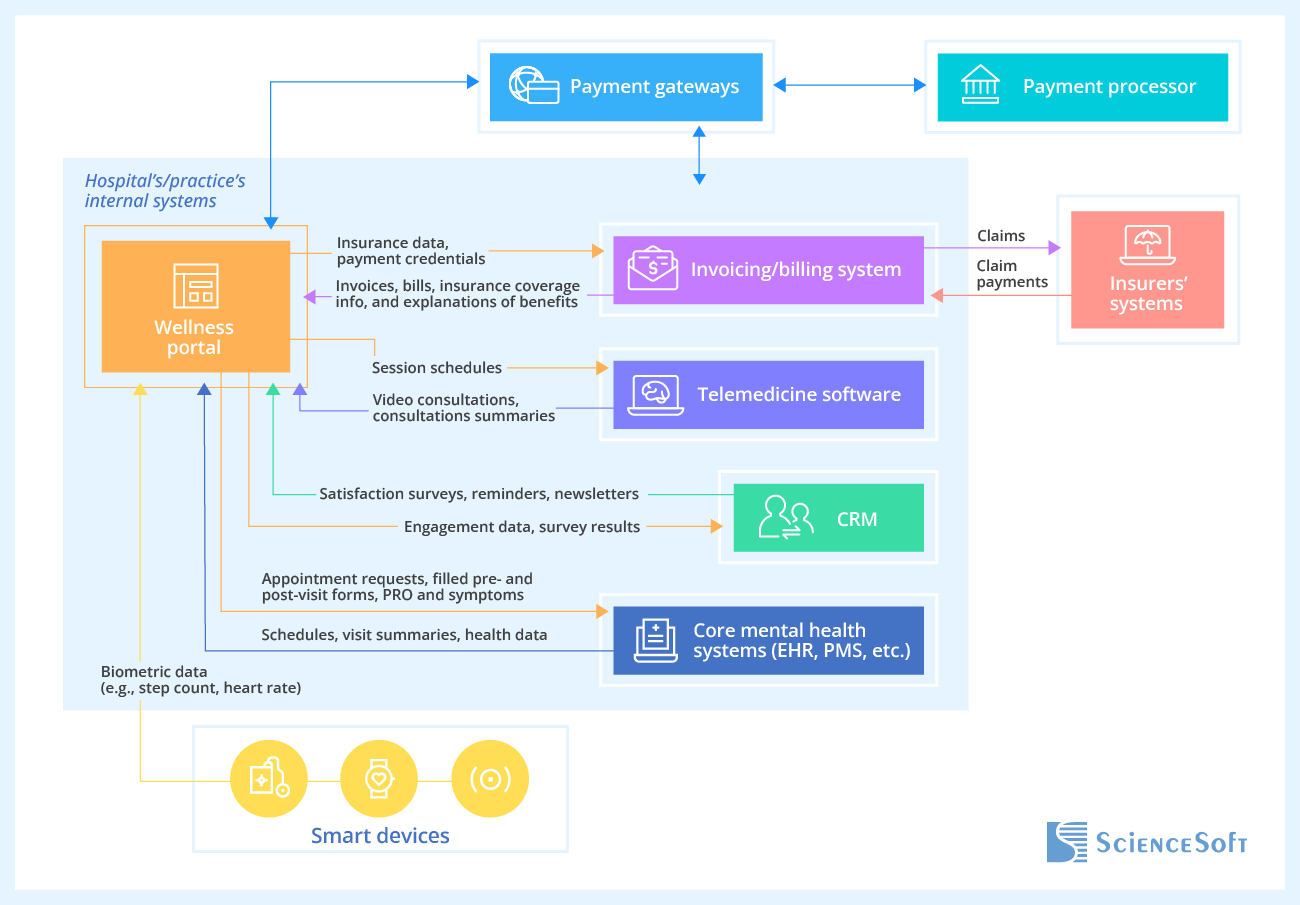
- Core healthcare systems (EHR, practice management systems) — to support personalized wellness plan creation and risk assessment with a patient’s medical history; to schedule appointments for preventive care services directly through the portal; to push patient insights on health and lifestyle data to the EHR.
- Smart wearables — to support early detection of potential health risks with real-time health data; to recommend personalized preventive care programs based on health and lifestyle data captured by wearables.
- Telemedicine platforms — to enable remote consultations and direct messaging with medical professionals or wellness coaches.
- CRM — to gather patient engagement data from the portal; to send post-visit satisfaction surveys to the patients; to share newsletters on the recently introduced preventive services and health programs.
- Billing and invoicing systems — to streamline payment processing and ensure accurate billing for preventive care services (for health systems), premiums (for healthcare insurance companies), or wellness services via the portal.
- Payment gateways — to enable online payments.
How to Build a Portal for Preventive Care
In this section, we outline the essential steps for creating wellness and preventive care portals. The actual plan may be adjusted to align with your organization's unique needs.
1.
Discovery and requirement gathering

During the initial phase, business analysts conduct interviews with the key stakeholders to identify the goals to be achieved with the wellness portal. They define user roles (e.g., patients, portal administrators, physicians, or wellness coaches) and their respective needs. This information is used to outline both functional and non-functional requirements essential for the portal's success. For large-scale projects, business analysts may conduct focus groups with patients to gather insights on their expectations and preferences. This helps prioritize features that enhance usability and drive long-term engagement.
Another key step is planning for compliance with healthcare legal frameworks (e.g., HIPAA, GDPR, and 21st Century Cures Act). Business analysts capture standards requirements for data exchange and content scope (FHIR-based APIs aligned to USCDI) and terminology mapping where relevant (SNOMED CT/ICD-10 for conditions, LOINC for lab results, RxNorm for medications). They also define the portal’s security controls, such as encryption and multi-factor authentication, and digital consent management features, such as secure, legally binding electronic consent forms with audit trails and automated expiration tracking.
2.
Architecture design

Solution architects start by translating documented requirements into technical attributes. They define the portal’s logical components (e.g., user management, data processing, and integration layers; AI-powered recommendation engine) and functional components (e.g., health tracking module, appointment scheduling module) and create detailed logical and functional architectural diagrams. The experts define the relationships between all the components in the diagrams and document the specifications for each module.
Solution architects also check for possible integration challenges (e.g., with legacy systems) and plan for ways to overcome them (e.g., implementing middleware). Lastly, they evaluate different technologies based on adherence to non-functional requirements, licensing costs, and potential long-term maintenance expenses and choose the most suitable tech stack.
At ScienceSoft, we proactively look for ways to guarantee software quality and minimize risks while delivering the solution on time and within budget. For instance, for highly regulated industries, such as healthcare, we often use pre-validated AWS and Azure reference architectures, which are based on built-in security, compliance, and scalability best practices.
3.
UX/UI design

In parallel with architecture design, UX and UI designers start working on creating a smooth experience for portal users of all technical backgrounds. They create user personas, outline user workflows, and build the portal’s wireframes. When creating interface designs for a wellness portal, designers prioritize clear navigation and engaging visuals so that users can effortlessly interact with the platform and stay motivated to maintain their wellness routines. They may focus on creating attractive gamification elements, such as badges, streaks, or achievement trackers to encourage habit formation or add small animations, e.g., when a user completes a goal (e.g., a checkmark appearing after logging a meal) to enhance interactivity.
Another key consideration is ensuring accessibility for users with disabilities (e.g., visual or cognitive impairments). When creating interfaces, designers adhere to Web Content Accessibility Guidelines (WCAG) and different best practices.
At ScienceSoft, we use a number of different design practices to ensure our web portals are accessible to all users. Let’s take visually impaired individuals as an example. They typically use assistive technologies such as screen readers to interpret the content of web pages. To make a page “digestible” for a screen reader (and, subsequently, its user), you should code it in a certain way. Landmarks allow users to jump between different sections of a page (e.g., navigation menu, main body, footer), which helps them skip straight to the necessary content. The main body can be structured further using heading levels and semantic tags. Heading levels outline the hierarchy of the text, from the primary topic to subtopics. Some screen readers allow jumping from one heading to another, skipping irrelevant text. As for semantic tags, they help users understand the type of content in front of them (e.g., table, image).


4.
Development and testing

In similar projects, ScienceSoft’s development team typically recommends an iterative approach. This way, the user feedback can be collected early and used to decide on feature adjustments in the next iteration. For example, if users encounter difficulties scheduling appointments, the team may consider adding additional functionality to enhance scheduling calendar usability, such as auto-suggested time slots based on past visits or provider availability.
QA engineers often conduct functional, security, and usability testing for the portal simultaneously with portal development. That way, the defects can be fixed as soon as they are detected, and development and QA teams can collaborate more effectively.
5.
Deployment and support
Once built and tested, the wellness portal goes live. Developers compile software documentation and review it to ensure it is up-to-date with all the implemented changes (if any). This phase also includes conducting training sessions for admins and the organizations’ IT support team (if there’s any) to help them manage the portal effectively. At ScienceSoft, we also offer a post-launch warranty (typically 1 to 3 months) during which we fix critical or major software defects free of charge.
Costs of Creating a Wellness Portal
The development costs of a custom wellness and preventive care portal range from $150,000 to $350,000+. Typical cost drivers include:
- Functional scope.
- The number of integrations with different systems (EHR, billing software, etc.).
- The number of connected devices.
- Complementary mobile development.
- The expected number of users.
- Non-functional requirements (performance, security, etc.).
- Compliance requirements (e.g., HIPAA, GDPR, 21st Century Cures Act).
Estimate the Cost of Your Healthcare Portal
These questions will help our healthcare IT consultants better understand your needs. Within 24 hours after completion, you’ll receive a free and non-binding custom cost estimation.

About ScienceSoft
- Since 2005 in web portal and healthcare software development.
- 150+ successful healthcare IT projects.
- Hands-on experience with HIPAA and GDPR regulatory requirements.
- Mature security and quality management systems backed by ISO 27001, ISO 9001, and ISO 13485 certifications.
Certifications and awards
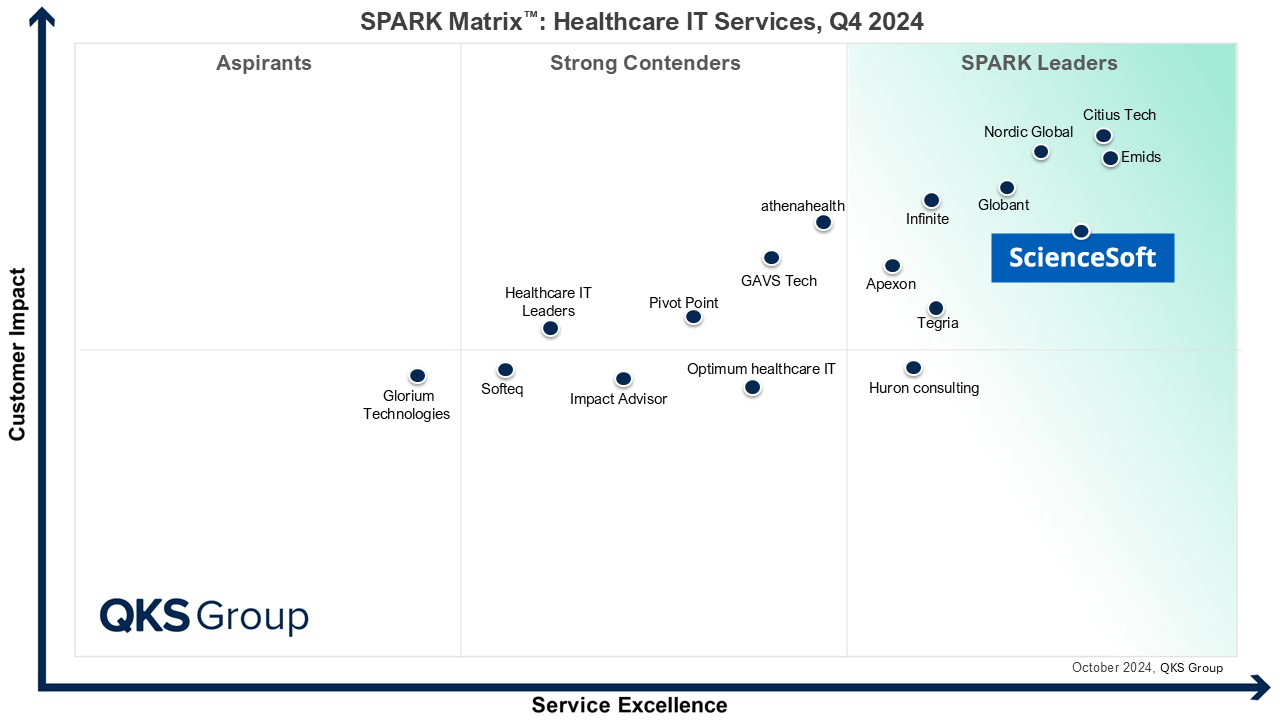
Featured among Healthcare IT Services Leaders in the 2022 and 2024 SPARK Matrix

Recognized for Healthcare Technology Leadership by Frost & Sullivan in 2023 and 2025

Named among America’s Fastest-Growing Companies by Financial Times, 5 years in a row
Four-time finalist across HTN Awards programs
Named among Becker’s Telehealth Companies to Know in 2026

Named Leading Healthcare Software Provider 2026 at GHP’s Healthcare & Pharmaceutical Awards

HIMSS Gold member advancing digital healthcare

ISO 13485-certified quality management system

ISO 27001-certified security management system
Our Clients Say


During the project flow, we were very pleased by the work of ScienceSoft’s business analysts and developers, who demonstrated a high level of skills and competence. They made many significant contributions to our products both in terms of functionality and quality.
We would definitely recommend ScienceSoft as a skilled and trustworthy consulting and development partner.


Todd Nilson
MD

We worked with ScienceSoft on the refactoring and modernization of our telehealth web portal and a cross-platform patient application. We are thankful for the meticulous and value-driven approach of ScienceSoft's team. They created comprehensive project documentation, feature lists, and worked out thorough recommendations to help us improve the stability and performance of our solution.
