 ScienceSoft Global



How Wearable Devices Support Efficient Health Monitoring
A wearable-based physiotherapy platform delivered by ScienceSoft led to a 70% reduction in pain and unnecessary surgeries among its users. Our clients get systems that drive measurable improvements in patient outcomes.
Wearable Health Monitoring Technology in a Nutshell
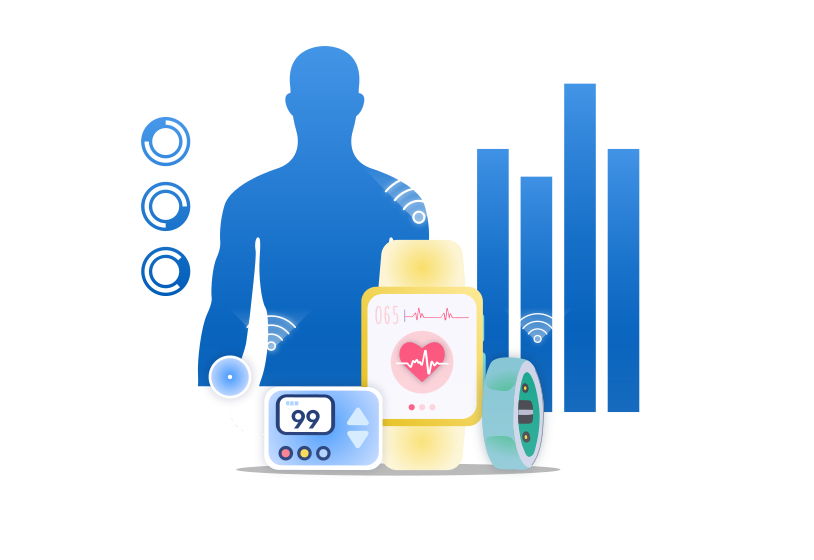
Wearable medical technology is increasingly used for health monitoring, chronic disease management, and preventive care. According to statistics, nearly 60% of US patients own a wearable healthcare device. These compact devices collect real-time physiological and behavioral data to provide clinicians with timely, actionable insights into the patients’ health trends.
Custom software for wearable-based health monitoring enables aligning the data capture and processing mechanisms with specific clinical needs. For example, in one of our projects, ScienceSoft’s team built custom motion capture algorithms to measure the range of motion of patient joints. The new algorithms significantly improved the accuracy and stability of the ROM sensors.
Wearable Device Market Overview
The wearable medical device market was valued at $42.74 billion in 2024 and projected to reach $168.29 billion in 2030, growing at a CAGR of 25.53%. The driving factors behind this growth include the rise of remote patient monitoring, the increasing demand for home healthcare, and a greater emphasis on a healthy lifestyle.
Sample Wearable Device Network Architecture
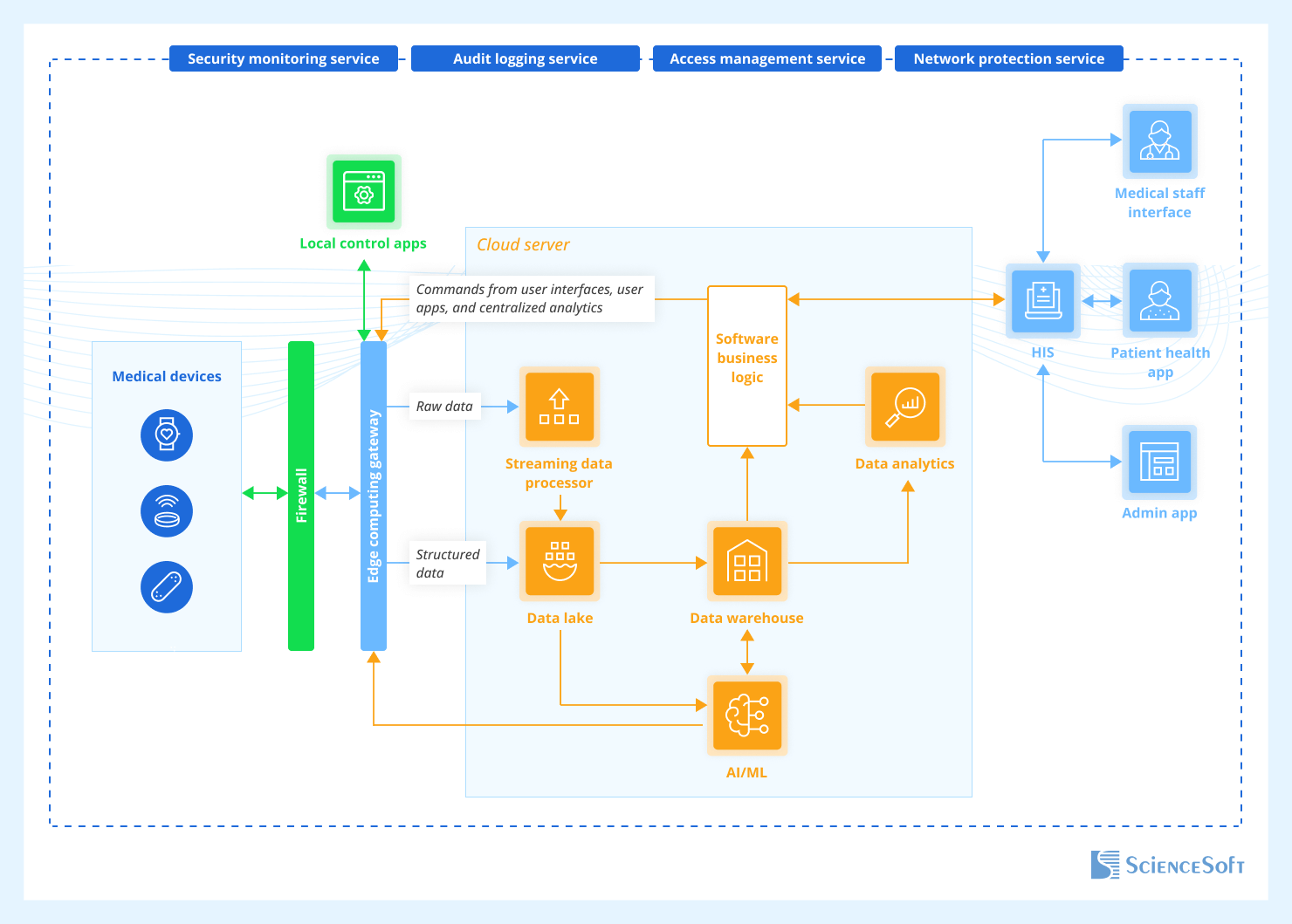
- Connected wearable devices transmit captured patient health information to the cloud back end via an edge gateway and firewall. The gateway temporarily stores the data (e.g., until a connection to a cloud is restored), filters redundant data, performs lightweight analytics, and forwards user commands (e.g., sampling frequency adjustments) from user apps to the devices.
- In the cloud, the stream processing module receives incoming data, analyzes it in real time, and enables low-latency responses such as alerts for abnormal health parameters. Raw and semi-structured data goes to the data lake, where it’s stored in its original format. After the data is cleaned and structured, it is sent to the data warehouse, where it’s available for fast querying, analytics, and reporting. The AI/ML engine processes raw data to enable the analytics module to detect anomalies in health data, predict health outcomes, or produce other high-level insights. Based on these insights, the engine can suggest or even directly perform setting adjustments via the edge gateway. Software business logic coordinates the workflows and routes relevant data between the system components (e.g., shows analytics results on the clinician’s dashboard).
- At the user interaction layer, role-specific interfaces connect to the back end via integrated hospital information systems (e.g., EHR, LIS, RIS), enabling clinicians and administrators to view relevant data and control device settings. Patients can also use dedicated apps to get limited insights into their health state and exchange messages with providers. The integrated systems also contribute contextual patient data, such as diagnoses, lab results, or medication history, to the cloud backend for more accurate analytics and decision-making.
- The entire ecosystem is safeguarded by dedicated services for access management, audit logging, threat monitoring, and network protection.

When discussing security in digital healthcare, access controls are often centered around people: who can access what, and when. But my experience shows that managing access at the device level is just as critical and often overlooked. Strong device identity verification allows healthcare organizations to ensure that only authorized devices can connect to the system and that all data comes from validated sources.
Common Application Areas and Capabilities of Wearable Health Monitoring Devices

Early disease diagnostics
Continuous wearable-based monitoring allows doctors to detect sporadic symptoms that might not be apparent during the physical checkup. If a patient reports occasional heart palpitations, the physician can prescribe a few weeks of remote cardiac monitoring to observe the symptoms. The device (e.g., an ECG patch) will continuously measure the patient’s heart rate, record any deviations from the norm, and then generate a detailed report for the doctor.

Chronic condition monitoring
Medical devices (including wearables) support long-term disease management by tracking condition-specific health data. For example, diabetes patients often use continuous glucose monitors (CGMs) to track blood sugar trends throughout the day. If a patient’s glucose levels spike after meals repeatedly, the physician will receive a notification and may then adjust insulin timing or recommend dietary changes. In more advanced solutions, the CGM can be connected to an insulin pump and implement the dosage changes directly according to preset rules.

Rehabilitation
After discharge or during at-home rehabilitation, patients can use wearables to monitor recovery trajectories. Those recovering from orthopedic surgery may use range of motion (ROM) sensors to track mobility improvement. Continuous data collection allows physicians to track patient progress, evaluate the effectiveness of the chosen treatment, and make informed adjustments to the care plan. For instance, if a patient fails to meet recovery benchmarks over several days, the doctor may consider recommending a different set of exercises.

Treatment adherence monitoring
Wearables can help track whether patients are sticking to non-medical treatments like taking regular walks, doing home-based exercises, or maintaining sleep hygiene. In more specialized solutions, wearable medical devices can be paired with ingestion sensors to directly confirm medication intake. The sensor is embedded into the drug capsule and, when exposed to the stomach fluids, sends a signal to a wrist- or neck-worn reader. In turn, the reader relays the ingestion data to a patient app or a clinician dashboard.

Neurological monitoring
Wearables designed for neurological conditions track movement irregularities like shaking, jerking, or rigidity. For seizure-prone patients, a wrist-worn device may detect convulsive motion patterns and notify a caregiver within seconds. For those struggling with Parkinson’s disease, wearables log tremor frequency and intensity throughout the day, which helps clinicians calibrate medication dosage and timing as well as determine whether a patient requires an urgent visit or a neurosurgical procedure.

Mental health monitoring
Mental health conditions often bring about multiple physiological symptoms such as increased heart rate, hyperventilation, tremors, and changes in electrodermal activity (EDA). Additionally, deterioration of mental health can influence behavioral patterns such as physical activity and sleep quality. All of these symptoms can be tracked using wearables in the same way we do for physical illnesses. This data can allow clinicians to monitor therapy progress, foresee relapses of mental illnesses, adjust medication, and intervene in case of suicidal risks.

Geriatric monitoring
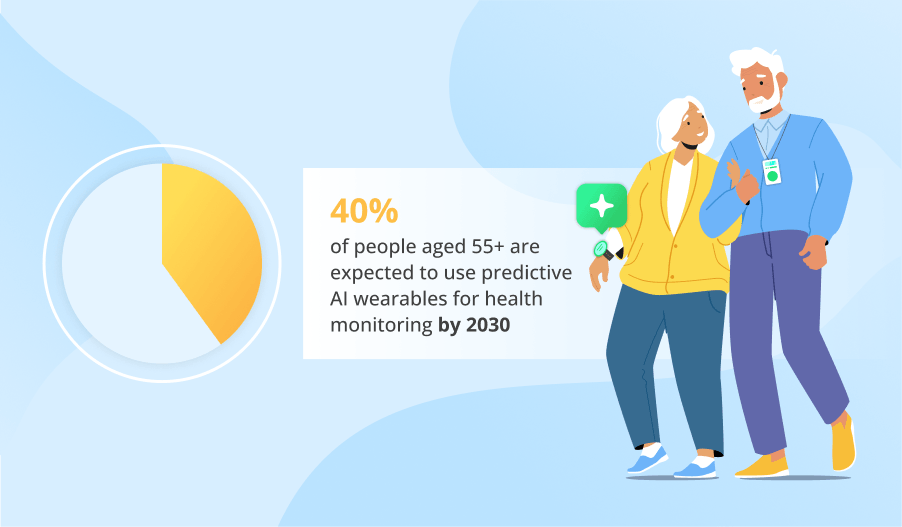
In nursing homes and assisted living facilities, wearable devices can be used to ensure the safety and well-being of geriatric patients. For example, smartwatches can be applied to continuously track heart rate to identify atrial fibrillation, tachycardia, and other issues. When powered by machine learning, they can even predict a cardiac event. In fact, our research suggests that, in the next 5 to 10 years, 50% of people over 55–60 will use wearables to catch such risks early on.

Pre-natal monitoring
During pregnancy, wearables are used to identify high-risk patients and prevent complications like preterm labor, hypertensive disorders, and gestational weight gain. Wearable devices for expectant mothers can monitor heart rate, blood pressure, body temperature, and uterine contractions. The devices can include smart rings, wristbands, skin patches, and clothing with embedded sensors. Fetal monitoring solutions rely on abdominal patches or belts equipped with Doppler or ECG-based sensors to track fetal heart rate and movements.

Sleep monitoring
Sleep-monitoring wrist-worn devices track total sleep time, time in each sleep stage (light, deep, REM), nighttime awakenings, and sleep regularity. In general wellness, they help users optimize rest and identify poor sleeping habits. But they can also be used for clinical purposes. Wearables can facilitate the detection and management of sleep disorders, such as obstructive sleep apnea. For example, Apple Watch can monitor the users’ breathing during the night and notify them if the disturbances are too frequent.

Clinical trials
In clinical research, wearables not only enable remote participation but also help reduce issues related to subjective input or fragmented data. For instance, actigraphy and accelerometers are gradually replacing patient surveys in physical activity and sleep quality assessments in oncology and neurology research. Similarly, in testing the effectiveness of diabetes treatments, CGMs have proved to be more reliable than traditional periodic measurements of HbA1c.

Physical activity and fitness
Fitness trackers help individuals monitor their step count, heart rate, calories burned, and overall physical activity intensity. For a casual user, it might simply be a nice way to encourage and maintain a healthier lifestyle. However, physicians can also utilize this data, along with other metrics, to assess an individual’s health state. For professional athletes, it’s often a necessity to prevent overtraining and related injuries.
Healthcare Providers Successfully Implementing Wearable Devices

Ochsner Health System launched a remote digital medicine program that used health monitoring devices like blood pressure cuffs and glucose monitors to help patients better manage hypertension and diabetes. The devices continuously measure patients’ blood pressure and blood sugar levels, and then automatically transmit this data to the Epic MyChart app and the EHR. Physicians then use the gathered data to personalize care plans. As a result, 79% of patients achieved better blood pressure control within 180 days. In the Digital Diabetes program, patients experienced a 57% reduction in hyperglycemia and a 74% reduction in hypoglycemic episodes, while 73% of patients from the control group showed no change in these measures.

Kaiser Permanente, in collaboration with Samsung, developed patient-facing mobile applications linked to Samsung smartwatches to deliver cardiac rehabilitation outside traditional rehabilitation centers. This approach relied on wearables to help patients monitor their activity levels and treatment progress, thus encouraging treatment adherence. The program achieved an 87% patient completion rate, representing a 74% improvement over traditional center-based rehab programs. Consequently, hospital readmission rates for cardiac rehab patients dropped to less than 2%.
Insights from ScienceSoft's Healthcare IT Experts

Kate Lukina, MD
Healthcare IT & AI Consultant, ScienceSoft
Research
ScienceSoft: 40% of Adults 55+ to Use AI-Powered Wearables for Health Alerts by 2030

Alena Madden
Senior Business Analyst and Healthcare IT & AI Consultant, ScienceSoft
How Wearable Biosensors Enable Effective Remote Patient Monitoring

Hadeel Abu Baker
Senior Healthcare IT & AI Consultant, ScienceSoft
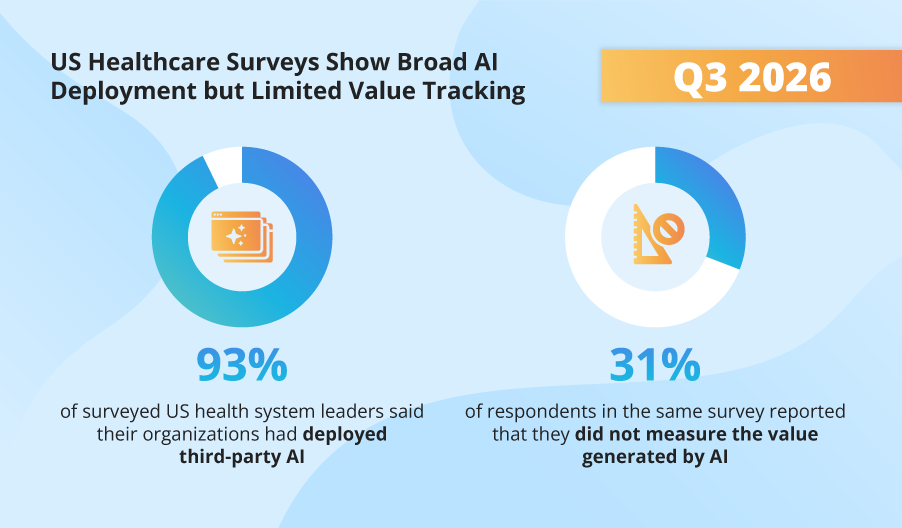
Trend watch
Q3 2026 Healthcare AI Trends by ScienceSoft | Oct 2026
Technologies We Use to Build Medical Device Networks
Device connectivity
- Wi-Fi
- 5G
- Bluetooth
- Bluetooth Low Energy
- NFC
- Zigbee
- NB-IOT
- LoRaWAN
Cloud services
- Amazon Web Services
- Microsoft Azure
- Google Cloud Platform
Real-time data streaming
- RabbitMQ
- Apache Kafka Streams
- Apache Storm
- Apache Flink
- Apache Spark Streaming
- Amazon Kinesis Data Streams
- Azure Event Hubs
Data lakes
- HDFS
- Azure Data Lake
Databases / data storages
SQL
- Microsoft SQL Server
- MySQL
- Oracle
- PostgreSQL
NoSQL
- Apache Cassandra
- Apache Hive
- Apache HBase
- Apache NiFi
- MongoDB
Cloud databases / data storages
AWS
- Amazon RDS
- Amazon Redshift
- Amazon S3
- Amazon DocumentDB
- Amazon DynamoDB
- Amazon ElastiCache
Azure
- Azure SQL Database
- Azure Blob Storage
- Azure Cosmos DB
Google Cloud Platform
- Google Cloud SQL
- Google Cloud Datastore
IoT data analytics
AWS
- AWS IoT Analytics
- Amazon Redshift
- Amazon DynamoDB
Azure
- Azure Stream Analytics
- Azure Synapse Analytics
- Azure Cosmos DB
Others
- Apache Cassandra
- Apache HBase
- Apache Hadoop
- Apache Spark
Front-end programming languages
Languages
- HTML5
- CSS
- JavaScript
JavaScript frameworks
- Angular JS
- React JS
- MeteorJS
- Vue.js
- Next.js
- Ember.js
Mobile
- iOS
- Android
- Xamarin
- Apache Cordova
- Progressive Web Apps
- React Native
- Flutter
- Ionic
Tackling the Challenges Associated With Wearable IoMT

Cloud dependency risks
According to research, the cloud segment of IoMT is expected to experience the biggest growth from 2025 to 2030. Those aspiring to join the trend or maintain a competitive edge need a smart approach to implementing cloud connectivity in their solutions. If a medical wearable device relies too heavily on a cloud connection, it can lead to data loss, delayed alerts, and disruptions in health monitoring.
Solution
Data management optimization
Wearable devices must constantly capture large amounts of patient health data. If the management of this data is poorly organized, it can lead to unnecessary data transmission costs, increased power consumption, and delays in system performance.
Solution
Why Develop Software for Wearable Health Monitoring with ScienceSoft
- Since 2011 in IoT.
- Since 2005 in medical software engineering.
- 550+ developers. 50% of developers are seniors or leads with 9–20 years of experience.
- Experience in developing software compliant with HIPAA, HITECH, the Cures Act, GDPR, FDA, FTC, EU MDR requirements, etc.
- Proficiency in healthcare standards (e.g., HL7, FHIR, USCDI, SNOMED CT, LOINC, XDS/XDS-I).
- An official partner of Microsoft and AWS.
Certifications and awards
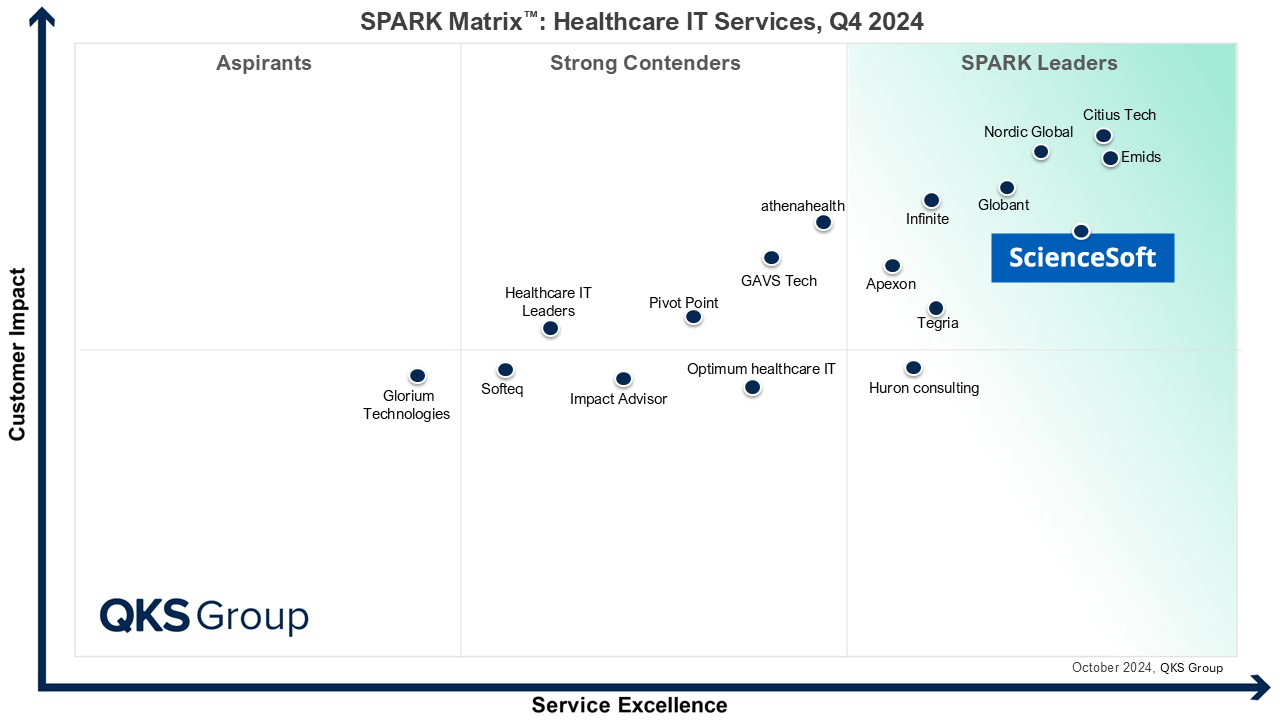
Featured among Healthcare IT Services Leaders in the 2022 and 2024 SPARK Matrix

Recognized for Healthcare Technology Leadership by Frost & Sullivan in 2023 and 2025

Named among America’s Fastest-Growing Companies by Financial Times, 5 years in a row

Four-time finalist across HTN Awards programs
Named among Becker’s Telehealth Companies to Know in 2026

Named Leading Healthcare Software Provider 2026 at GHP’s Healthcare & Pharmaceutical Awards

HIMSS Gold member advancing digital healthcare

ISO 13485-certified quality management system

ISO 27001-certified security management system
Our Clients Say


Patrick Pakan
Founder and CEO

Thanks to ScienceSoft’s practical healthcare IT expertise, we created a musculoskeletal therapy platform that can be fully customized and reflect the needs of each program member.



ScienceSoft designed and developed a native iOS app that offers a quantitative assessment of users’ physical fitness. I was impressed with the excellent level of responsibility, communication skills, and mobile competencies of both the management team and developers. All the tasks were completed accurately, promptly, and efficiently.


To develop a mobile application for our Bluetooth-enabled devices for newborn and baby care, we opened an app development tender. ScienceSoft's proof-of-concept was convincing enough for us to further the cooperation. During the project flow, we were very pleased by the work of ScienceSoft's business analysts and developers, who demonstrated a high level of skills and competence.
How Much Does It Cost to Enable Wearable-Based Health Monitoring?
The costs of implementing wearable-based health monitoring technology typically range from $50,000 to $400,000+, depending on the following factors:
- Functional scope (e.g., the presence of advanced AI/ML-powered capabilities).
- Number and complexity of device integrations.
- Need for real-time data synchronization.
- Compliance requirements (e.g., the need for FDA submission).
- Development approach (e.g., native vs. cross-platform mobile apps, the need for a web app).
- Non-functional requirements (e.g., security, performance).
- Uniqueness of UX/UI design.

$50,000–$150,000
For a basic non-clinical fitness app that offers manual activity logging, GPS tracking, and a library of training and educational resources.

$200,000–$300,000
For a complex (but still non-clinical) fitness app that supports gamified progress-tracking and workout personalization based on each user’s goals and preferences.

$200,000–$400,000+
For EHR-integrated wearable-based remote patient monitoring software that can be augmented with clinical decision support and telemedicine capabilities.
