 ScienceSoft Global



Medical Imaging Software Development
ScienceSoft brings 21 years in healthcare IT to deliver medical imaging software backing up doctors’ experience with sophisticated algorithms.
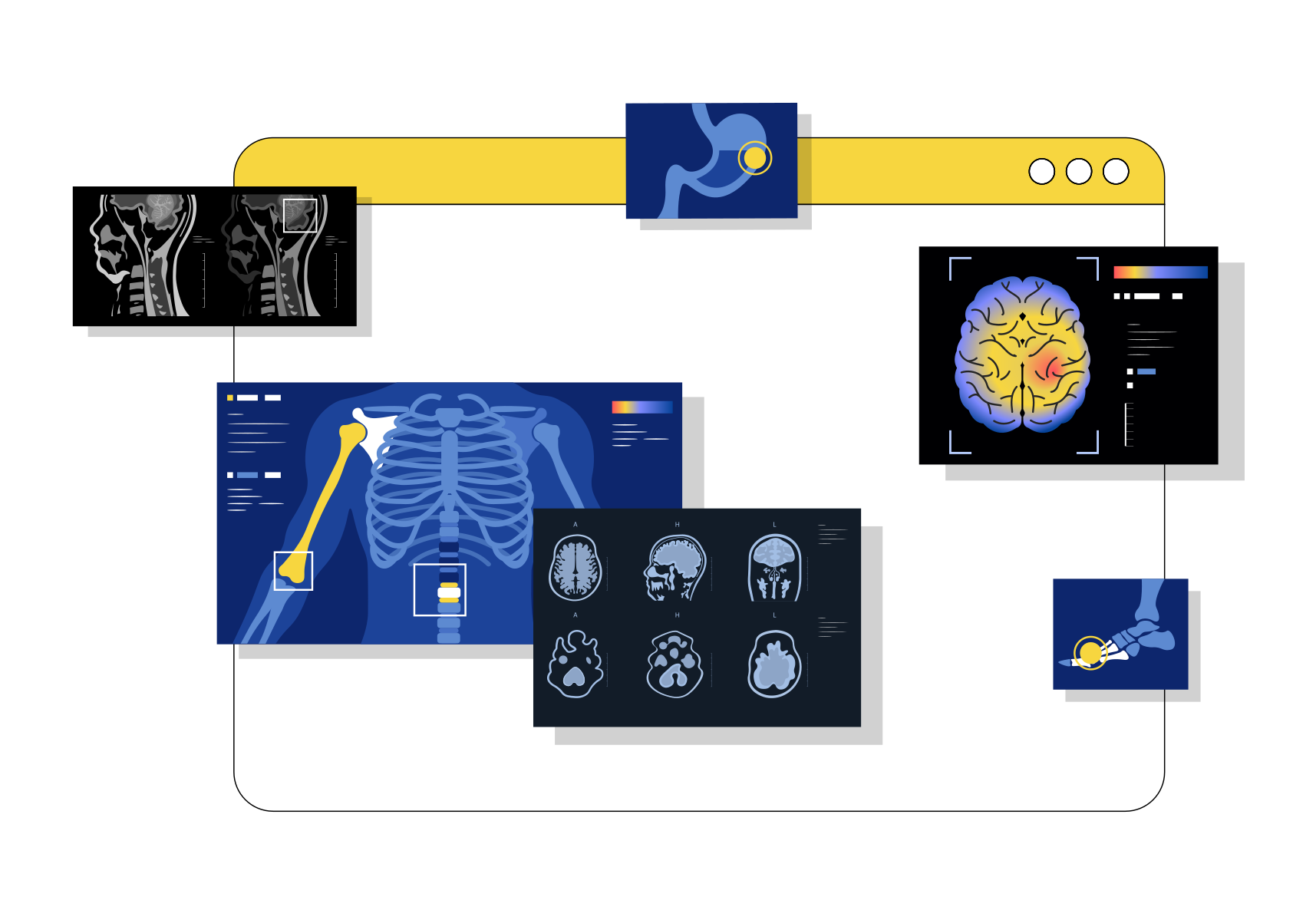
Medical imaging software helps healthcare professionals gain a clear view of a patient’s health, leading to more accurate diagnoses and faster, more effective treatments. ScienceSoft is a software development company that builds medical image analysis software to support diagnostic accuracy.
It works alongside imaging hardware (such as X-ray machines, CT scanners, and ultrasound devices) to acquire, process, and analyze medical images. The software enhances image quality, automates abnormality detection, and leverages AI for advanced diagnostics.
Medical Imaging Software Market Overview
In 2025, the international medical image analysis software market was estimated at $8.75 billion. It is forecasted to grow at a CAGR of 7.8% to reach $12.76 billion by 2030. The need for robust and efficient medical imaging solutions is increasing due to:
- A growing number of people with chronic diseases. According to the CDC, 75% of US adults live with at least one chronic condition.
- Increasing consumer trust. According to research, 60% of respondents feel confident about an analytics-assisted radiology diagnosis.
- The need to speed up medical image analysis. Specialized solutions can reduce image reading time by up to 30% and human reading workload by up to 60% (npj Digital Medicine).
Driving Clinical and Research Benefits
We offer technological support to researchers, medical innovators and medical device manufacturers for tackling complex challenges in preventing, diagnosing and treating diseases. Enabling both manual and automated (via artificial neural networks) analysis of 3D medical images, you unlock the following opportunities to the benefit of providers and patients:
|
|
Machine learning systems to facilitate early diagnostics for higher cure and survival rates. |
|
|
Neural networks for diagnosis validation. |
|
|
Research-specific algorithms to find hidden patterns and valuable insights to improve drug development as well as examination of complex conditions with adverse symptoms. |
|
|
Segmentation solutions to pinpoint a treatment area and thus minimize possible damage to healthy tissue during an invasive procedure. |
|
|
Applications integrating 3D imaging with virtual reality (VR) devices to enable immersive training of health specialists, patient education, and advanced diagnostics. |

Why ScienceSoft Excels in Medical Imaging Software
- Image analysis software development since 2013.
- Working in healthcare and mobile domains since 2005.
- Quality management system for medical devices and SaMD backed by ISO 13485:2016 certification.
- Deep knowledge of healthcare data exchange standards and clinical terminologies (e.g., HL7, ICD-10, CPT, SNOMED CT, XDS/XDS-I).
- Guidance on regulatory compliance with HIPAA, GDPR, MDR, FDA, NCPDP D.0, and more.
Certifications and awards
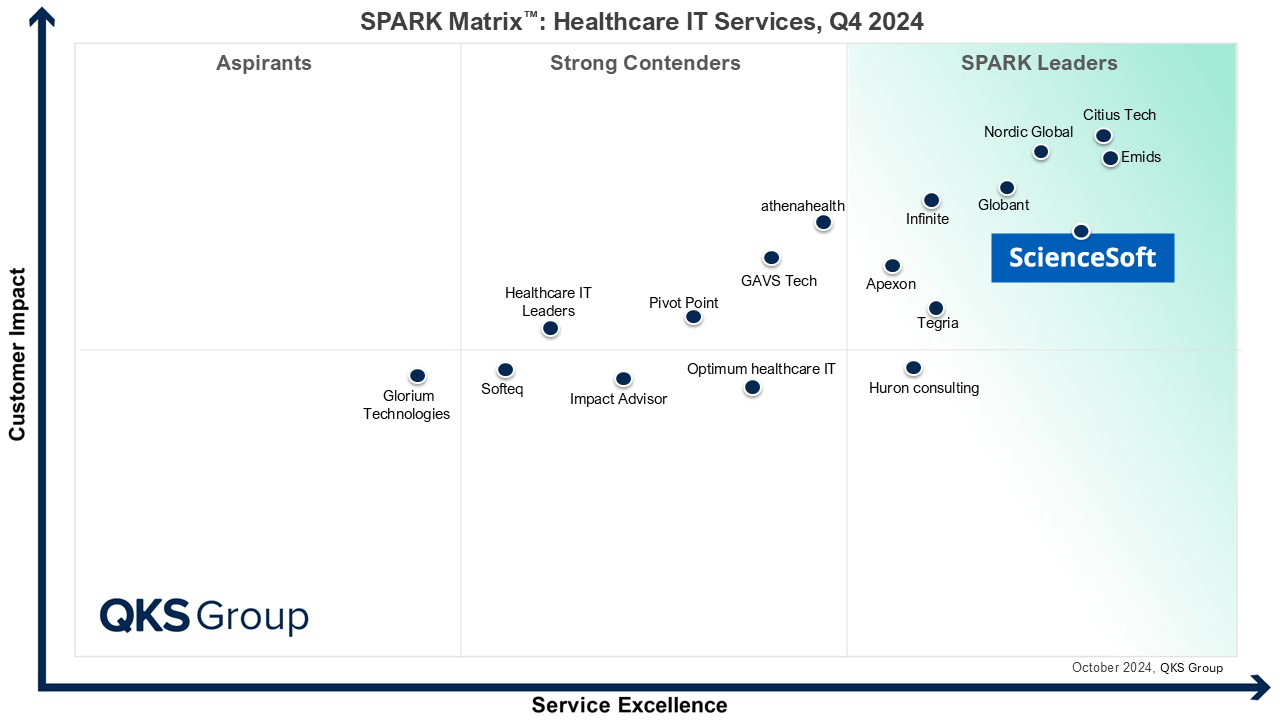
Featured among Healthcare IT Services Leaders in the 2022 and 2024 SPARK Matrix

Recognized for Healthcare Technology Leadership by Frost & Sullivan in 2023 and 2025

Named among America’s Fastest-Growing Companies by Financial Times, 5 years in a row

Four-time finalist across HTN Awards programs

Named among Becker’s Telehealth Companies to Know in 2026
Named Leading Healthcare Software Provider 2026 at GHP’s Healthcare & Pharmaceutical Awards
HIMSS Gold member advancing digital healthcare

ISO 13485-certified quality management system

ISO 27001-certified security management system
Our Approach to Your Challenges
You strive to supply clinical stakeholders with unprecedented medical imaging software that makes diagnostics, treatment and research evolve. We believe that achieving these goals depends on reliability and proficiency of the partner you choose for the journey. Our approach to your needs always includes:

Communication with professionals in your language
Being on the same page is key to ensure the results you expect. Therefore, not only our solutions speak healthcare, but everyone who will contact you.

Technical experience that matches the clinical need
Our teams of technical specialists rule over math algorithms and do the job to deliver only a reliable solution. To create high-performing and cost-effective solutions for image processing in the medical field, we bring 37 years in C++ and R development on Linux, Windows and OS X. To support computing-intensive tasks, we also offer parallel computing and performance optimization. On top of that, we organize our workflows according to the ISO 13485:2016 and IEC 62304:2006 / Amd 1:2015 standards.
Modalities We Are Proficient In
Depending on the type of diagnostics patient requires, medical staff can use various medical imaging devices: CT scanners, ultrasound machines, and others. ScienceSoft is experienced in creating analysis software for the following modalities:
- CT (computed tomography), e.g., chest or abdomen CT scans.
- MRI (magnetic resonance imaging), e.g., brain or cardiac MRI scans.
- PET (positron emission tomography) used for the assessment of cancers, neurological or cardiovascular diseases.
- SPECT (single-photon emission computed tomography) used to diagnose and monitor bone, neurological, and cardiac disorders.
- Ultrasound images used for disease prevention, diagnosing, and monitoring in various medical specialties.
- X-ray (radiography) scans, often used in injury care, dentistry, pulmonary care, and other medical specialties.
- Mammography for breast cancer prevention and monitoring.
- Other modalities.
Medical Image Analysis Powered by Machine Learning
To aid in medical image analysis, machine learning algorithms process large amounts of medical data and identify complex patterns. ML is efficient for the following tasks:
- Disease diagnostics.
- Medical image segmentation.
- Tissue type identification.
- Health outcomes prediction.
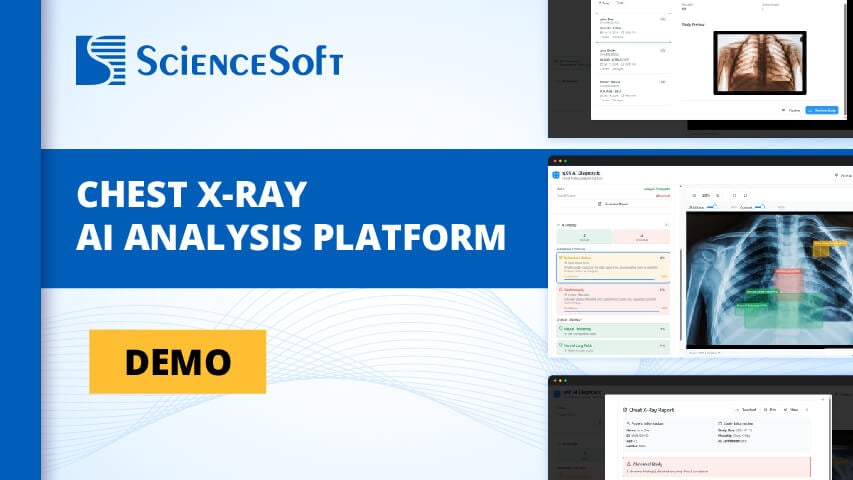
See Chest X-Ray AI Analysis in Action
This demo tour shows a clinician workflow in a chest X-ray AI analysis platform, from PACS study retrieval to AI findings on the image. Use it to gauge what a production-style UI can look like and what integrations an ML-powered X-ray workflow may require.
Body Mapping
3D image analysis of particular body parts has certain specifics to it. We are ready to handle your needs in analyzing tissues, bones, muscles and organs in depth, including:
- Abdominal system (liver, spleen, kidneys, gallbladder, etc.)
- Genitourinary and endocrine systems (urinary bladder, prostate, reproductive organs, thyroid, etc.)
- Cardiovascular system
- Respiratory system
- Brain and spinal cord
- Mammary glands and more
Our Clients Say



Working with ScienceSoft was a pleasure from A to Z. Their deep knowledge of the healthcare industry specifics and DICOM standard helped us create the back end of the software for our ultrasound scanner.
We are grateful for their can-do attitude, responsiveness, and straightforward communication. RIVANNA already witnessed tangible benefits of our cooperation.


bioAffinity Technologies hired ScienceSoft to help in the development of its automated data analysis software for detection of lung cancer using flow cytometry.
Our project required a large amount of industry specific methodology and algorithms to be implemented into our new software connected to EHR/LIS systems, which the team handled well. They are reliable, thorough, smart, available, extremely good communicators and very friendly.



During our cooperation, ScienceSoft proved to have vast expertise in the Healthcare and Life Science industries related to the development of desktop software connected to laboratory equipment, a mobile application, and a data analytics platform.
They bring top-quality talents and deep knowledge of IT technologies and approaches in accordance with ISO 13485 and IEC 62304 standards.


To develop a mobile application that would enhance a line of Bluetooth-enabled devices for newborn and baby care, we opened an app development tender.
ScienceSoft's proof-of-concept was convincing enough for us to further the cooperation. During the project flow, we were very pleased by the work of ScienceSoft's business analysts and developers, who demonstrated a high level of skills and competence.
Insights from ScienceSoft's Healthcare IT Experts

Lola Koktysh
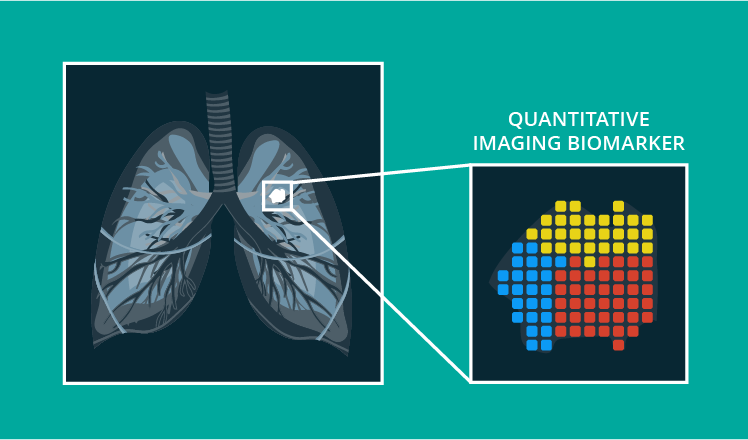
Quantitative imaging biomarkers: From subjective observations to objective characteristics
Lola Koktysh
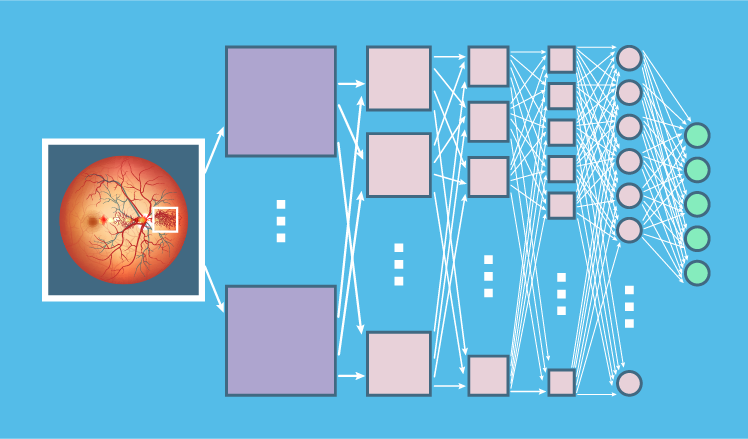
Trick or Treat: Using CNNs in medical image analysis for automated diagnostics

Hadeel Abu Baker
Senior Healthcare IT & AI Consultant, ScienceSoft
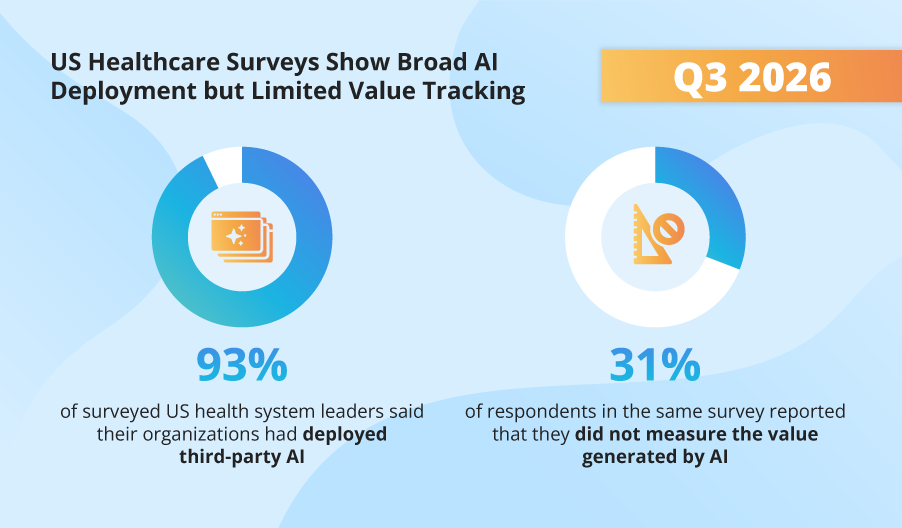
Trend watch
Q3 2026 Healthcare AI Trends by ScienceSoft | Oct 2026
Technologies We Use for Medical Imaging Software Development
Image formats
We support a wide range of common standards and specialized extensions, including:
- DICOM
- Analyze
- MINC
- NIfTI
- ECAT7 and more
Methods
We apply image quality improvement methods at the preprocessing stage to reduce noise, remove artefacts, compensate spatial aliasing and enhance contrast. With improved images, health specialists can ensure the right diagnosis and subsequent treatment, as well as enable automated image analysis further.
Segmentation allows us to separate a bone, tissue, vessel, organ, or other analyzed structure from the surroundings. For example, to isolate brain tissue from the skull and peripheral tissue.
We leverage image fusion / registration methods either for images acquired in different modalities (e.g., CT and PET) or within one modality but in different timeframes. Fusion or registration allows monitoring a lesion's growth and form change, analyze nonlinear tissue deformations, help with interventional procedures and more.
Through quantification, we define already segmented structures on medical images with diagnostic information about their size, form, texture, morphology and specific aspects of dynamics in time.
