 ScienceSoft Global
 ScienceSoft Finance



Cybersecurity Testing Services for Investment Firms
ScienceSoft combines cybersecurity and investment software engineering expertise to test investment applications, IT infrastructure, and high-risk workflows against investment-specific attack scenarios, including AI-related ones. We help our clients identify and prioritize vulnerabilities, implement necessary software, architecture, and configuration changes, and verify the results.

Contributors

Cybersecurity Director and Principal Architect, ScienceSoft

Senior Financial Technology & AI Researcher, ScienceSoft
Investment security testing is a risk-based assessment of investment systems and workflows for weaknesses that can lead to investor data exposure, account takeover, transaction manipulation, redirected funds, or critical operations disruption.
For SEC-registered investment advisers (RIAs), cybersecurity requirements and examination priorities can shape which controls deserve particular attention:
- Regulation S-P requires safeguards for protecting customer information, and its amended requirements also cover incident response procedures and oversight of service providers.
- SEC 2026 examination priorities highlight areas such as data loss prevention, access controls, account management, AI-related risks, third-party oversight, and operational resilience.
For firms subject to FINRA oversight, FINRA’s 2026 Cybersecurity Effective Practices recommend periodic vulnerability and penetration testing of critical systems and reassessment after significant changes. They also highlight controls such as multi-factor authentication (MFA), reauthentication for high-risk actions, least privilege, segregation of duties, and third-party access management.
Who We Serve
-
 Asset managers
-
Investment advisors
-
Wealth managers
-
Hedge funds
-
Institutional asset owners
-
Investment banks
-
Private equity (PE) firms
-
Venture capital (VC) firms
-
Private credit firms
-
Family offices
-
Broker-dealers
-
Digital brokers
-
Trading firms
-
Investment software providers
-
Wealthtech companies















How We Test Investment Cybersecurity
ScienceSoft tailors the security testing scope to your investment systems, critical workflows, applicable regulations, and realistic abuse paths. This helps us prioritize high-risk areas and focus testing where a compromise could have the greatest business impact.
Attacks we check for across investment workflows
We identify security weaknesses that could expose common investment workflows to attacks and abuse, including the examples below.
-

Investor account opening and identity verification
Read all- Using stolen or synthetic identities.
- Submitting forged or manipulated identity documents or proofs of residence, incl. AI-generated ones.
- Creating duplicate or multiple accounts using repeated or altered identity information.
- Bypassing automated identity, eligibility, or KYC checks used in the account opening process.
- Exploiting weaker verification requirements in web or mobile onboarding to avoid checks enforced in another channel.
- Abusing manual review or exception-handling paths to obtain account approval after automated checks fail or flag anomalies.
-
Investor authentication and account recovery
Read all- Bypassing MFA, e.g., via alternative login and recovery paths.
- Attempting credential stuffing against investor accounts.
- Hijacking or reusing authenticated sessions, including improperly invalidated sessions.
- Enrolling attacker-controlled devices to gain or retain trusted access to an investor account.
- Exploiting exposed password reset tokens.
- Impersonating an investor during support-assisted recovery.
- Enumerating valid user accounts.
- Bypassing step-up authentication for high-risk account changes or transactions.
-
Account changes and money movement
Read all- Changing linked bank account or beneficiary details without the required reauthentication or approval.
- Manipulating or initiating unauthorized withdrawals, wire transfers, or third-party transfers.
- Bypassing configured withdrawal or transfer limits to move more funds than the transaction or account should permit.
- Circumventing dual-approval controls so a transfer can proceed without the required second authorization.
- Replaying or duplicating a valid withdrawal or transfer request.
- Sending simultaneous requests so multiple transactions pass balance, limit, or approval checks before the system records the event.
-
Trading and order management
Read all- Submitting orders for accounts the user is not authorized to trade from.
- Manipulating order parameters.
- Replaying or repeatedly submitting valid order requests to trigger duplicate execution or expose idempotency weaknesses.
- Exploiting cancel/replace conflicts that could result in unintended or conflicting executions.
- Abusing privileged permissions or overrides to perform trading actions unavailable to the user’s normal role.
- Compromising the integrity of order and execution audit records.
-
Portfolio management workflows
Read all- Changing investment mandates or portfolio constraints, such as asset allocation, concentration, risk, or sector/ESG limits, to allow investments or exposures that should otherwise be restricted.
- Manipulating rebalancing rules, triggers, or target bands to cause unintended trades or changes in asset allocation.
- Making unauthorized changes to benchmark selections or mappings to distort how relative portfolio performance is measured or reported.
- Changing tax-related settings, tax-aware rebalancing rules, or tax-loss-harvesting parameters to trigger unintended asset sales or portfolio changes.
-
Advisory workflows
Read all- Altering investor profile data, such as investment objectives, risk tolerance, time horizon, or financial capacity, so portfolio construction or advisory logic operates on false inputs.
- Manipulating investment recommendations so they conflict with the investor’s objectives, risk tolerance, or stated preferences.
- Altering fee rules, rates, or billing parameters to change the amounts charged to investors.
- Bypassing or manipulating required approval steps or hierarchies for portfolio and advisory actions.
-
Fund and investment operations
Read all- Manipulating capital-call or distribution amounts, recipient details, or payment instructions to misstate investor obligations or redirect funds.
- Altering fee, expense, or profit-sharing allocations to shift amounts among investors, funds, or entities.
- Manipulating market prices, valuation rules, or other inputs used to calculate a fund’s net asset value (NAV).
- Suppressing or manipulating reconciliation discrepancies between internal, custodian, or bank records so unauthorized activity remains undetected.
- Bypassing maker-checker controls so a single user or compromised account can both initiate and approve sensitive transactions or accounting changes.
-
AI-enabled investment workflows
Read all- Manipulating generative and agentic AI used in investment research, advice, portfolio workflows, and operations through prompt injection.
- Accessing another investor’s, client’s, or business unit’s data through improperly restricted RAG (retrieval-augmented generation) or other retrieval workflows.
- Exploiting weaknesses that expose sensitive or proprietary data through prompts, model outputs, logs, or vector stores.
- Exploiting excessive AI agent permissions or missing approval gates to perform unauthorized investment or operational actions.
- Abusing insecure model APIs, plugins, connectors, or third-party AI services as access paths into investment data or systems.


General cybersecurity controls we verify
ScienceSoft examines security properties and technical trust boundaries that support the workflows above:
-
Access boundaries and tenant isolation
We check for access control weaknesses that could allow attackers to:
- Access another account’s, client’s, or firm’s data or functionality.
- Cross boundaries between client, adviser, support, operations, administrator, and other roles.
- Escalate privileges or abuse excessive permissions.
- Exploit object-level authorization weaknesses, including IDOR/BOLA, to access or modify unauthorized records.
- Break tenant isolation in multi-tenant investment platforms.
-
Third-party integration security
We test integrations with custodians, banks, clearing, KYC, market-data, CRM, and other third-party systems for:
- API and webhook vulnerabilities that could allow unauthorized, manipulated, or replayed requests.
- Weak authentication or access restrictions in file exchanges, including SFTP and batch transfers.
- Excessive or unintended access through service accounts and OAuth permissions.
-
Third-party credentials and vendor access
We check how third-party credentials and access permissions are secured, focusing on:
- Exposure or insecure handling of API keys, tokens, certificates, and other integration secrets.
- Vendor and support remote access extending beyond authorized systems.
- Failure to revoke vendor accounts, tokens, credentials, or remote access when no longer required.


Compliance evidence we provide
Security testing can help validate selected security controls and provide evidence for regulatory examinations, audits, and customer assurance activities. Depending on the engagement scope, ScienceSoft can map testing and findings to applicable technical requirements or control areas in Regulation S-P, FINRA guidance, SEC examination focus areas, SOC 2 criteria, or enterprise customer requirements.
The resulting evidence can support a broader compliance program but does not by itself establish compliance with a regulation or framework.
What security testing can validate
Depending on the applicable requirements and systems in scope, testing may cover:
- Controls protecting customer information and sensitive data flows.
- Authentication, reauthentication for high-risk actions, access boundaries, privileged access, and segregation of duties.
- Third-party integrations and service provider access.
- Security monitoring, detection, escalation, and selected incident response workflows.
- Selected technical resilience and recovery controls, such as backup protection, recovery access, and security-relevant recovery mechanisms.
Evidence you receive
ScienceSoft can provide:
- Scope-to-control mapping showing which requirements or control areas were covered by testing.
- Test records, findings, and supporting evidence, such as screenshots, API request-response logs, and other artifacts documenting the tests performed and observed results.
- Remediation and retest records showing whether identified weaknesses were addressed and whether the fixes passed verification.
- Executive- and compliance-oriented summaries of material findings and control weaknesses.
- A dated, scope-specific assurance statement and technical evidence package for relevant regulatory, examination, audit, or customer assurance activities.
Need a Targeted Security Assessment?
Talk to ScienceSoft’s cybersecurity and investment IT compliance experts to develop a testing strategy that matches your environment, business risks, and compliance needs. The consultation is free and non-binding.

Cybersecurity Services for Investment Companies
-
We conduct black-, gray-, and white-box pentests of investment applications, APIs, AI solutions, infrastructure, and connected systems. Our experts safely attempt to exploit technical and business logic vulnerabilities to demonstrate realistic attack paths and assess their potential impact.
-
Security assessments and technical reviews
We review investment system architecture, source code, cloud configurations, access controls, and other technical safeguards to identify security weaknesses. Our assessments can support internal security reviews, regulatory audit preparation, and customer or partner due diligence.
-
We conduct controlled phishing, vishing, impersonation, and deepfake-assisted tests to assess employees' susceptibility to manipulation. Our scenarios reflect investment-specific threats, such as fraudulent transfer instructions, adviser impersonation, and support-assisted account takeover.
-
Recurring and release-based security testing
We can provide regular security testing on an annual, quarterly, or custom schedule, as well as additional testing after major software releases or system changes. We combine manual testing, automated checks, vulnerability tracking, and retesting to help maintain security as your investment systems evolve.
-
Red teaming and resilience exercises
We simulate multi-stage cyberattacks involving technical intrusion, phishing, impersonation, privileged access abuse, and other threats to investment operations. We can also conduct incident response and recovery exercises to assess how effectively your teams handle cyber incidents, data breaches, and critical vendor outages.
-
Security remediation and retesting
We can go beyond recommending fixes: our security specialists, software developers, and architects can implement the necessary code, architecture, configuration, and infrastructure changes. We then retest the affected components and workflows to verify remediation and check for regressions.


Our goal is not to hand over a report and leave the client to sort it out. We want their teams to know which findings create the greatest risk and should be fixed first, and which issues can reasonably be addressed later. Security testing should make the next decision easier and give clients the confidence to move forward with releases, integrations, or other important changes. Just as importantly, we plan testing around your operations, so the assessment doesn't cause unnecessary disruption.
ScienceSoft as Your Investment Cybersecurity Partner

Our experience building and testing investment systems helps us identify realistic abuse scenarios and attack paths during threat modeling.
Broad experience across technologies, attack surfaces, and evolving attacker techniques helps us investigate less obvious, investment-specific attack paths.
Our expertise in AI security and governance helps us identify vulnerabilities in AI-enabled workflows and support their remediation.
We can bring security testers, compliance consultants, architects, developers, and AI engineers into one engagement, with remediation support available on request.







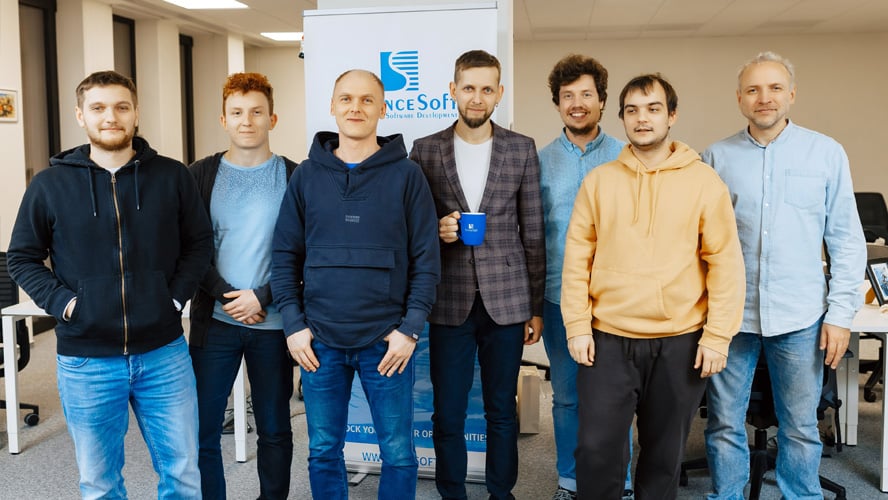

- ScienceSoft has provided security testing services to one of the world’s top 3 asset managers with $5T+ in AUM.
- Our team has experience with sectoral security, privacy, and assurance requirements, including SEC Regulation S-P, FINRA expectations, GLBA, NYDFS Cybersecurity Regulation, GDPR, SOC 2 criteria, and more.
- We adhere to best security practices outlined by NIST, CIS, OWASP, PTES, and other authoritative sources.
- 62% of our revenue comes from clients who have worked with ScienceSoft for 2+ years, reflecting our experience supporting long-term and recurring engagements.







Our Clients Say



We really liked how comprehensive but to-the-point the reports were. ScienceSoft's experts were also eager to share their knowledge and readily answered our questions, so we managed to handle the detected issues in no time.



Their engineers went beyond standard test procedures and identified several risks that would have been easy to overlook. The reporting was clear, practical, and focused on the real level of risk.

They were very responsive and helpful in planning of the tests. We were very satisfied with the professional, timely, and friendly service and we greatly appreciate their help in securing our networks.


We are fully satisfied with our partnership with ScienceSoft. Their team provided penetration testing in a timely and professional manner and gave us valuable recommendations on improving the security of our web apps and the external IP address.



Common Questions About Investment Security Testing
How do you prevent security testing from disrupting trading and other production operations?
Before testing starts, ScienceSoft agrees with you on safe testing boundaries, approved testing windows, stop conditions, and which scenarios can run in production versus staging. Real trades, real money movement, destructive tests, and disruptive availability testing are excluded unless specifically authorized and safely isolated. Where needed, we use test accounts, test data, and non-destructive scenarios to obtain realistic evidence without putting live operations at unnecessary risk.
How do you protect investor and investment data during testing?
- At ScienceSoft, we protect client data under our ISO 27001-certified security management system and project-specific security procedures. We adhere to the principle of least privilege: access to your systems and data is limited to authorized project team members who need it for their work. We also use secure channels and controlled project environments to protect sensitive information at rest and in transit.
- Where required, we isolate project environments to meet specific security or compliance needs. ScienceSoft also signs an NDA and removes client data from its environment when it is no longer needed.
- Our Code of Conduct requires personnel to access personal data only when necessary for legitimate project purposes, anonymize it where possible, and immediately report suspected loss, misuse, or unauthorized access.
How is AI security testing different from conventional security testing?
Conventional security testing looks for exploitable weaknesses in software and infrastructure. But an AI system may behave unsafely even when those underlying components are properly secured. With generative AI, sensitive information can be disclosed through its inputs or outputs, while an AI agent can misuse legitimate access to connected tools and systems to take unintended actions.
In investment environments, AI may handle investor, portfolio, or proprietary data; influence recommendations or portfolio decisions; act on workflows, e.g., within investment management software, that ultimately affect accounts, orders, and investment operations.
ScienceSoft therefore tests not only the technology around the AI but also the boundaries of what the AI is allowed to know and do. We establish which data it can access, which actions and systems it can reach, and where human approval should stop autonomous behavior, then build realistic abuse scenarios around those boundaries. Conventional application, API, cloud, and infrastructure testing complements this AI-specific assessment.
How do you account for risks introduced by custodians and other third parties?
ScienceSoft tests the connections and access paths between your environment and third parties (e.g., APIs, webhooks, service accounts, SSO and OAuth permissions, integration credentials, file exchanges, and remote access) to see whether they could be abused to expose data or enable unauthorized actions. We also check whether third-party access is appropriately limited and can be revoked when no longer needed.
Testing stays within the agreed scope, and we do not test third-party-owned systems without explicit authorization from the system owner.
How do you prove a vulnerability is really fixed, not just marked as closed?
After remediation, rather than treating a code or configuration change as evidence that the risk is gone, ScienceSoft can do a round of retesting. We reproduce the testing conditions that revealed the vulnerabilities, verify their current status, and check for new vulnerabilities that may have appeared after the changes.
What will our security, engineering, and compliance teams receive after testing?
ScienceSoft can adapt the reporting to the teams that need to understand and act on the findings:
- Engineering and product teams receive reproducible technical evidence, affected components, exploit conditions, and remediation guidance.
- Security leaders get a view of attack paths, recurring or cross-system weaknesses, control effectiveness, residual exposure after remediation, and remediation priorities.
- Compliance, risk, and executive stakeholders get the findings translated into implications for investor data, accounts, transactions, operations, third parties, and examination readiness.
All reports are based on the same confirmed findings and supporting evidence, with the level of detail adapted to each audience. When faster action is needed, urgent findings can be delivered before the final report through integration or export to Jira, ServiceNow, GitHub, or Azure DevOps.
How Much Investment Security Testing Costs

Investment security testing costs range from $8,000 to $40,000+ for one-time engagements, depending on scope, target complexity, testing depth, custom scenarios, and specialist requirements.
Want to get a ballpark estimate for your case? It’s free and non-binding.
Take a look at sample costs for typical one-time engagements:
- $5,000+ — testing a simple GenAI application, such as an LLM-based underwriting assistant that summarizes submissions and prepares risk summaries.
- Around $10,000 — penetration testing of a client-facing investment application, such as an investor portal or robo-advisory tool.
- $8,000–$16,000 — code review of an internally used investment solution, such as portfolio management or investment research software.
- $10,000–$20,000 — compliance pre-audit against applicable regulatory requirements, such as SEC, NYDFS, GDPR, or other relevant frameworks.
- Around $20,000 — network security testing for a midsize investment management organization.
- $40,000+ — a phishing campaign combined with white-box penetration testing of the investment IT infrastructure.
If you need help implementing the recommended fixes, ScienceSoft can scope and price remediation separately, including changes to software code, architecture, infrastructure, configurations, and related systems.
